Choose a Time When You Can Stay Together
The afternoon slows down for a little while, and the table has room for a Bible and two strips of paper. Good Friday for kids can begin with a short, honest conversation with a trusted adult.
Allow about fifteen minutes, with extra time afterward if questions come. Choose a familiar spot where a child can sit beside you, draw or hold a comforting toy. You can join your church’s observance and still keep the conversation at home brief.
Begin With Plain, Gentle Words
Begin with a simple explanation: “On Good Friday, Christians remember that Jesus died on a cross. It is a sad part of the Easter story. We also know that Easter celebrates his resurrection.” Give children the whole frame before reading the difficult part.
Use the word “died” rather than saying Jesus went to sleep. Keep your explanation free of graphic detail, and let the child’s questions guide what you say next. A younger child may want only a few sentences; an older one may want to look carefully at the reading.
If your family has recently experienced a death, make space for that connection without assuming the child will bring it up. You can say, “This may remind you of someone we miss. You can tell me about that, too.” You don’t need to make sadness disappear before continuing.
Read a Short Passage, Then Pause
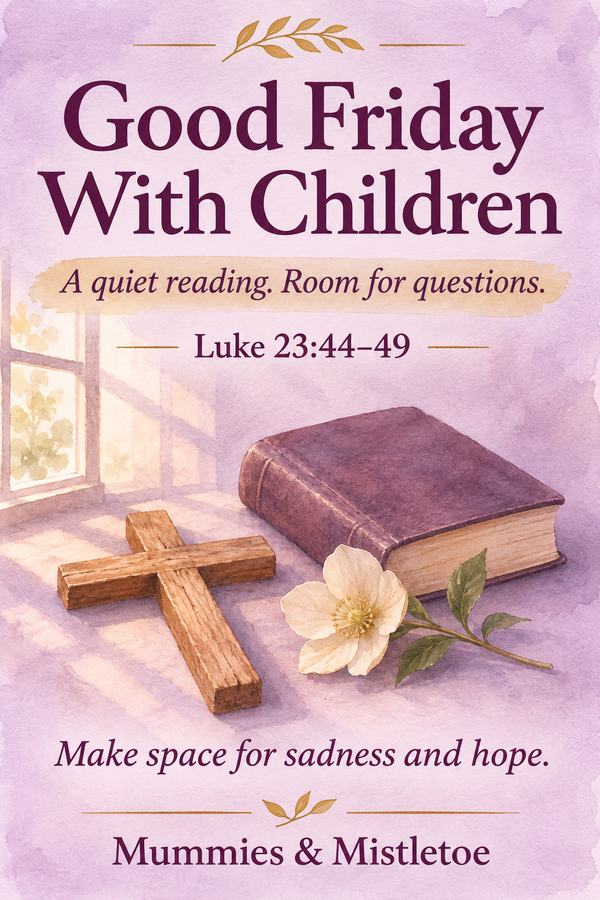
Read Luke 23:44-49 in the World English Bible, choosing in advance whether the full selection suits your child. This passage tells of Jesus’ death and the people watching. Read it slowly so the child can listen without struggling to sound out the words.
Afterward, pause before offering an explanation. Ask what the child noticed, and accept an answer about the people, the darkness or the words Jesus speaks. They may also say they don’t know what to think yet.
If you read further into Luke 23:50-56, explain that Joseph places Jesus’ body in a tomb and that the women see where he is laid. Keep the account attached to the people and actions in the passage. Let those words and actions carry the reading.
Make a Paper Cross for the Table
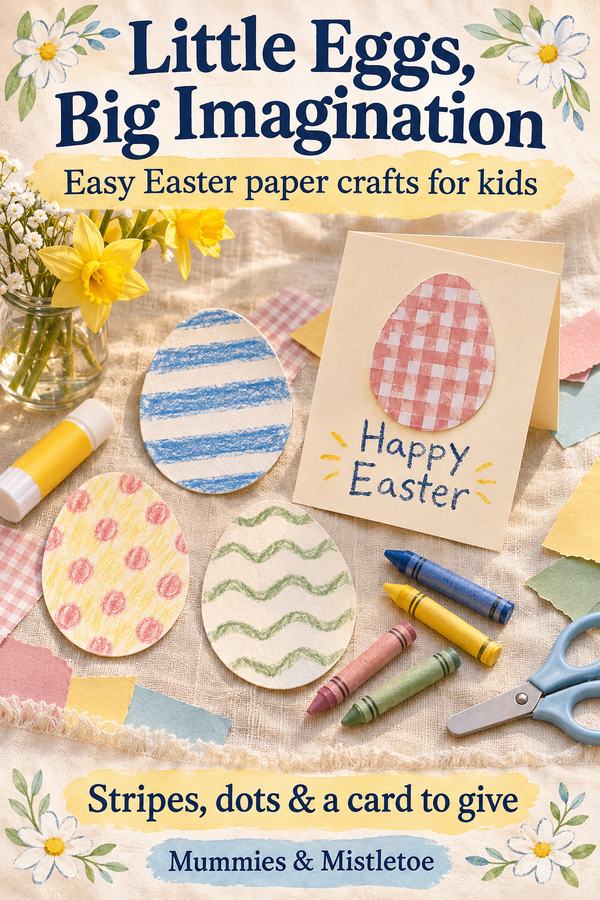
Prepare one strip of brown or dark paper about one inch wide and seven inches long, and a second strip one inch wide and four inches long. You’ll also need a sheet of cream paper, a glue stick and a pencil. An adult can cut the strips beforehand so the activity stays quiet and straightforward.
Place the longer strip vertically on the cream sheet. Lay the shorter strip across it about two inches below the top, then glue both down. Let the child choose whether to leave the background plain or add a border in pencil.
Beside the cross, a child can write a person’s name to remember in prayer, or ask you to write it for them. Another option is drawing a small picture of that person on a separate piece of paper. The cross can stay uncluttered while the prayer paper sits beside it.
Keep the picture simple enough that making it leaves time to talk. A child who would rather listen can place the strips while you glue them. Someone who wants more time can finish the border later.
Answer the Question You’re Actually Hearing
When a child asks why Jesus died, give a short answer consistent with your church’s teaching, then check what they meant. They may be asking about the physical event, the people involved or the meaning of the cross. Those are different conversations, and you don’t have to answer all of them at once.
For a question you can’t answer, say, “I want to think about that with you,” and write it down to discuss with a pastor or another trusted teacher. Avoid turning uncertainty into a lecture. Returning with an answer later shows that the question mattered.
Teach about sin, redemption and forgiveness in age-appropriate words consistent with your church's teaching. Avoid telling a child that they personally caused the suffering in the reading or asking them to imagine being hurt. Leave room for questions and reassurance.
Include Hope Without Rushing the Sad Part
A child doesn’t have to wait until Easter morning to be told that Jesus rises again. Knowing where the story goes can help them hear this part without feeling abandoned in it. You can acknowledge both: this day is sorrowful, and the resurrection belongs to the story as well.
Keep the paper cross on the table through the evening if your family wants that reminder. On Easter, you might place a flower beside it or read the resurrection account together. Tell the child what you plan to add on Easter and why.
After the conversation, children may be ready for play, lunch or a walk. The reading can matter even when their mood changes.
Close With a Name and a Prayer
Invite each person to name someone they want to remember, or let them pass. A brief original prayer could be, “Jesus, be near to those who are hurting. Help us care for them with gentleness. Thank you for your love. Amen.”
Place the name paper beside the cross and close the Bible together. Sit nearby for a few more minutes, with room for the question that comes after the activity is over.