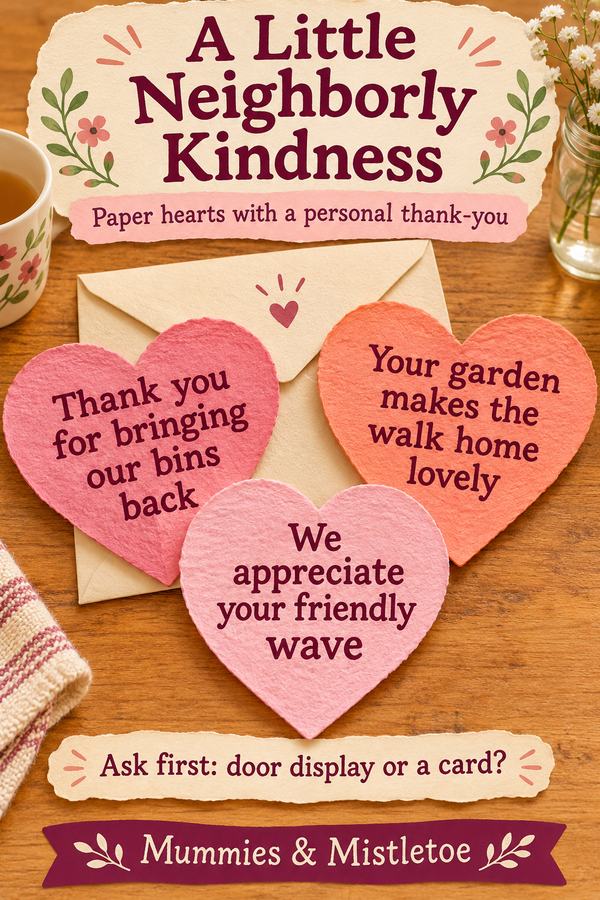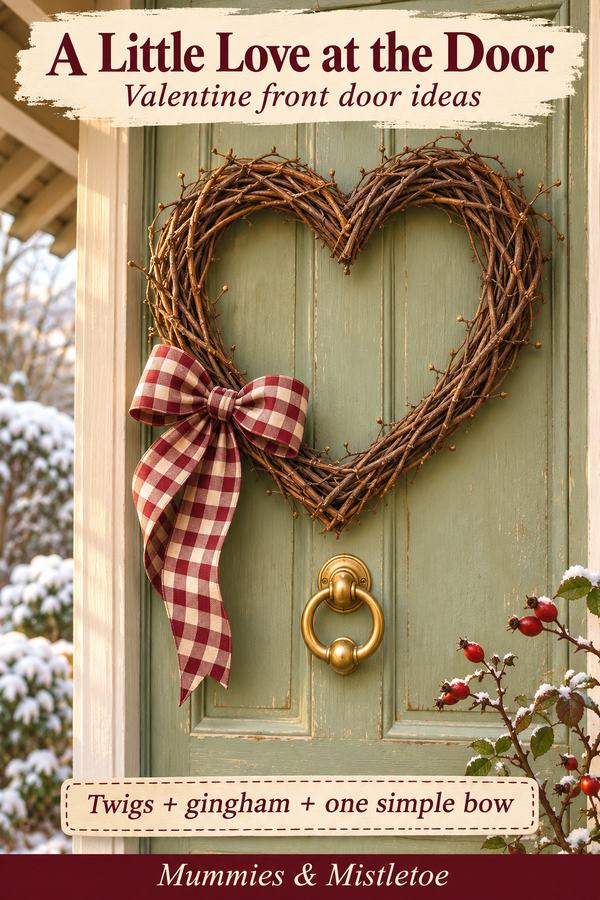
The neighbor who brings in your bins or waves from the garden may deserve a thank-you bigger than a quick nod. Heart attacking door ideas turn that thank-you into a group of paper hearts, each carrying a small friendly message. The name sounds dramatic, but the nicest version is simple, personal and welcome.
Plan it for someone you know would enjoy the gesture. Ask before putting anything on another person's door, and offer a paper panel or an envelope of hearts if they'd rather keep the entrance unchanged. You can preserve the surprise in the messages without making the decoration itself an unwelcome surprise.
Choose the Person and the Right Moment
Think about what the neighbor has actually done, or what you appreciate about seeing them. Someone who enjoys seasonal decorations may like a bright paper display. Someone who values privacy may prefer the same notes tucked into a card.
A short question is enough: “We'd love to make you a little paper-heart thank-you. Would you like it on your door, or would a card be better?” If children are helping, an adult should arrange the visit and stay with them. Follow any building or shared-entry rules.
Choose a time that won't wake someone, interrupt a work call or leave the display outside in bad weather. Agree on who will remove it afterward. That last detail makes the gift easier to enjoy, because the recipient isn't being handed a cleanup job along with the kindness.
Make One Heart-Filled Panel
For one display, gather a sheet of sturdy paper about 12 by 18 inches, six to eight paper hearts, a dark pen, scissors and a glue stick. Make the hearts roughly 3 to 4 inches wide so each has room for a readable message. Red, pink and cream give you variety without making the writing hard to see.
Arrange the hearts on the large sheet before attaching them. Put a simple heading at the top, such as “A Few Things We Appreciate About You,” then leave a small space between the hearts. This turns the decoration into one panel that can be put up and taken down together.
Use only the attachment method the owner approves for that door and follow its directions. Never assume a tape is safe for every paint or finish. Keep the panel away from the handle, lock, peephole, doorbell and anything the person needs to use.
Write Notes That Sound Like Real Neighbors
Use specific, ordinary examples. “Thank you for bringing our bins back” says more than “You're amazing.” Other possibilities include “Your garden makes the walk home lovely,” “We appreciate your friendly wave” and “Thank you for looking out for our parcel.”
If children are writing, let them choose a detail they recognize. A drawing of the neighbor's flowers or dog can accompany a short dictated message. An adult can help with spelling without replacing the child's words with a more polished speech.
Keep private information off a visible door. Don't mention someone's health, absence from home or personal circumstances in a public display. If the reason for the thank-you is sensitive, put that message inside a sealed card instead, and use a simple friendly note on the panel.
Invite Several People Without Turning It Into a Contest
For a shared thank-you, give each participating household one or two hearts. Tell them the size and when you need the notes back, then assemble the panel yourself or with the children. A small group of thoughtful messages will fit more comfortably than a door covered in dozens of tiny scraps.
Ask contributors to write from their own experience. You don't need matching phrases or a vote on the most touching note. If someone would rather draw, leave a space for their picture.
Sign the bottom with first names or whatever the participants and recipient are comfortable sharing. Avoid adding contact details to a public-facing display. The neighbor should be able to recognize who made the gift without the paper becoming a directory of the street.
Use an Envelope When the Door Isn't Suitable
A covered porch may work for a short display, while an exposed entrance may not. If rain, wind or the door's finish makes a panel impractical, put the hearts into a large envelope and write “A little neighborhood thank-you” on the front. Hand it over at the agreed time.
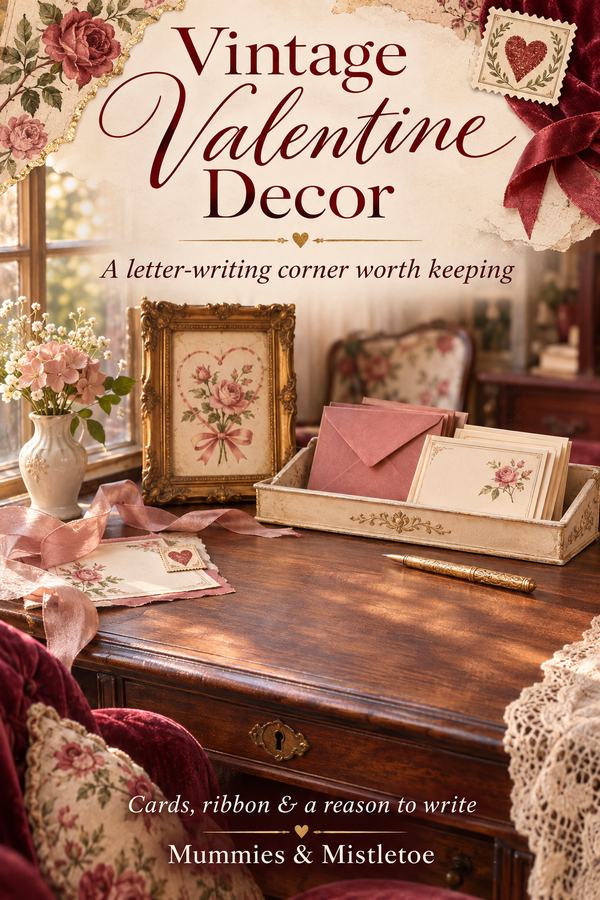
For someone who likes to display cards indoors, fold the large sheet into a standing card instead of mounting it outside. Attach three or four hearts to the front and put the remaining messages inside. That gives them a choice of where to keep it.
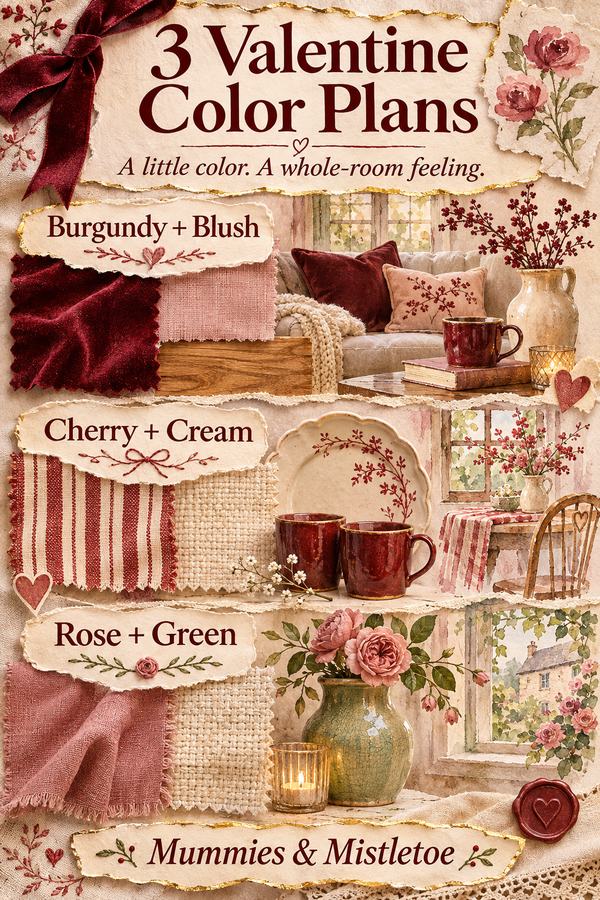
Coordinated printable note shapes can help a group make one connected display, and ordinary paper hearts work just as well. Choose colors the recipient enjoys, with dark lettering that is easy to read.
Hand Over the Thank-You
Keep the handover brief unless the neighbor invites you to stay. Children can say thank you and point out a drawing, then let the recipient read the rest in their own time. No one needs to react on camera, and you should ask before taking or sharing a photo.
If you agreed to remove the panel, return when arranged and follow the attachment product's removal directions. Offer the panel back so the neighbor can keep the notes. Pick up any loose paper rather than leaving it in the garden or hallway.
Afterward, ask the children which small kindness they noticed first. The paper hearts are a way to say it aloud, and that habit of noticing can last well beyond February.
If you later want a small thank-you gift for that neighbor, explore Mummies & Mistletoe with one of the kindnesses from your hearts in mind. Choose for their own taste, and let the specific handwritten thanks remain the most personal part.