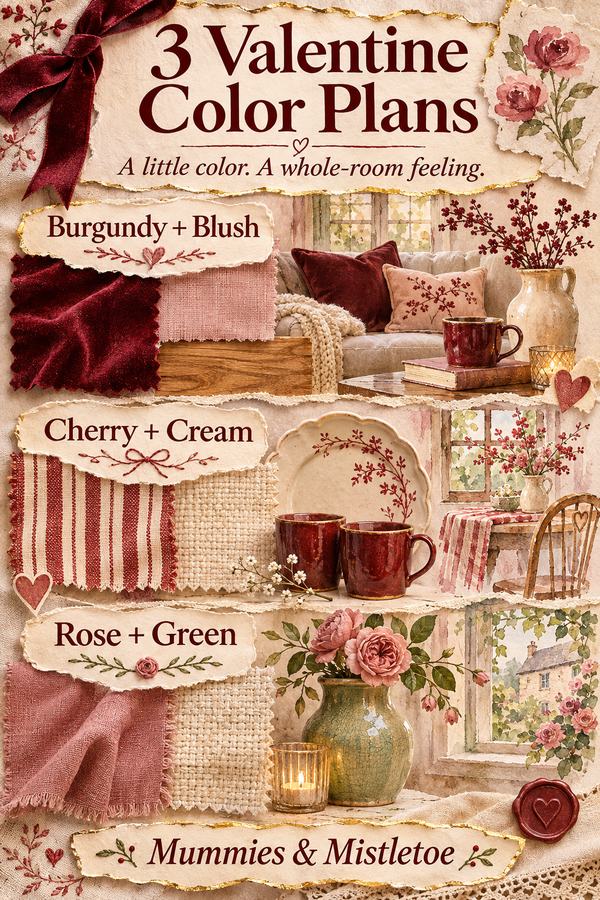
A red napkin on the breakfast table and a pink cushion on the sofa can look lovely together. The trick is to repeat a little of each color, so the room feels intentional. These three Valentine's color plans connect the places where you sit, eat and come through the door.
Pick one of the three schemes below. Each covers a sitting area, a dining or breakfast table and an entry, using a short list of pieces. Start with the things you own, fill only the gaps that matter to you and keep the same main colors as you move between the spaces.
Choose Your Color Story
Use your largest fixed surface as the starting point. Warm wood and brown upholstery suit the burgundy-and-blush plan. White or cream rooms can take the sharper red-and-stripe plan. Green, blue or patterned rooms often work with the cream-and-rose plan, where most of the decoration stays neutral.
Make a little color card with two scraps of paper or fabric and carry it between rooms. Check the colors beside the sofa, the dining dishes and the entry furniture. A shade that clashes in one space can be a smaller accent there instead of the main feature.
For each room, choose one anchor and one echo. The anchor is the larger patch of color, such as a cushion or tablecloth. The echo is smaller, such as a napkin or a piece of ribbon on a package. This keeps the rooms related without making them identical.
Plan One: Burgundy, Blush and Warm Wood
Gather two blush cushion covers, one burgundy textile, a cream vase and three small burgundy accents you already like. The accents might be a bowl, a mug and a paper place card. Keep the existing wooden furniture visible so it becomes the third part of the scheme.
In the sitting area, place the blush cushions at opposite ends of the sofa and fold the burgundy textile over one arm. Use the cream vase on the side table. On the dining table, repeat blush through napkins and put the burgundy bowl in the middle when it is not needed for serving.
At the entry, use just one burgundy accent beside the normal key dish. This scheme gets its depth from different sizes of color, not from covering every object in hearts. A single heart-shaped place card at dinner can supply the seasonal shape.
Plan Two: Cherry Red, Cream and Stripes
Gather one red-and-cream striped or checked textile, plain cream dishes, two red mugs and a few sheets of red paper. Let the pattern be the anchor on the dining table. Use plain red elsewhere so the room has a clear rhythm instead of several competing prints.
Lay the patterned textile across the table, add cream dishes and set a red mug at each end. In the sitting area, use one plain red cushion or throw. If you have neither, a red bowl on a side table can repeat the color at a smaller scale.
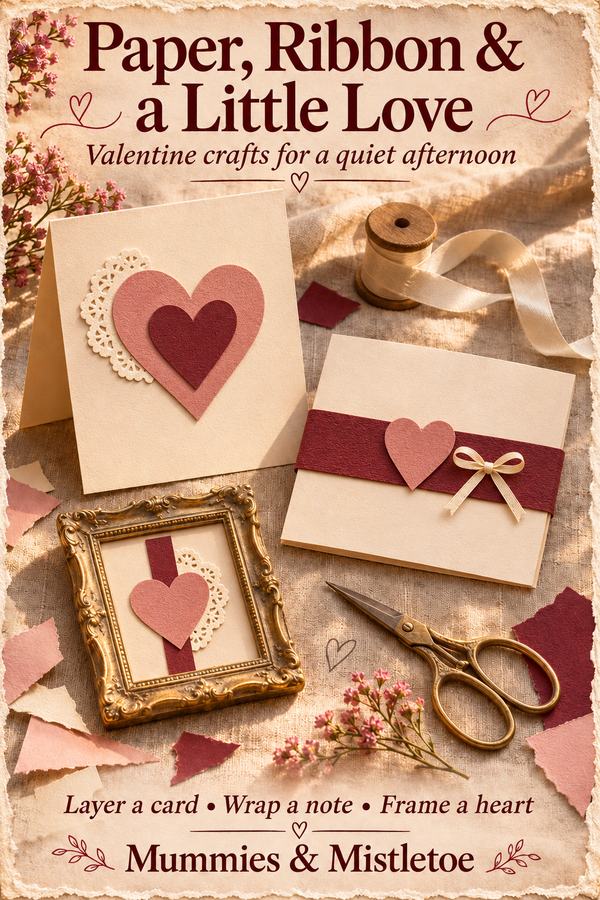
For the entry, make a broad red paper heart and place it in a card holder or attach it safely to a plain surface. Repeat the stripe only if you have a small offcut for a tag. This is the brightest plan, so give the red shapes cream or wood around their edges.
Plan Three: Cream, Dusty Rose and a Little Green
Gather a cream textile, rose-colored napkins or paper and a small green vessel. This plan works well when the room already contains green or blue and you want the seasonal additions to sit alongside them. Use dusty rose as the new color rather than replacing the room's existing palette.
Put the cream textile in the sitting area and add one rose accent nearby. On the table, pair ordinary plates with rose napkins and the green vessel. Choose flowers that children and pets can safely be around, or enjoy the vessel's shape on its own.
At the entry, use a folded rose-colored note beside something green already there. The repeated rose connects the spaces. Cream remains the larger background, which lets a patterned chair or colorful rug keep its place in the room.
Make a Three-Room Setup List
Write three lines before you begin: sitting area, table and entry. Beside each, name its anchor and echo from your chosen plan. This is your setup list, and it will tell you whether you need another object or simply need to move one.
For a small home, use the same idea within one room: sofa, eating table and the surface nearest the door. You can reduce each location to a single color accent. For a larger home, finish those three places before deciding whether any other room needs a change.
Walk from the entry to the table and sitting area. A burgundy mug near the sofa might be all it takes to connect that corner with burgundy napkins across the room. Try moving a small piece before buying anything else.
Use Hearts Where People Will Notice Them
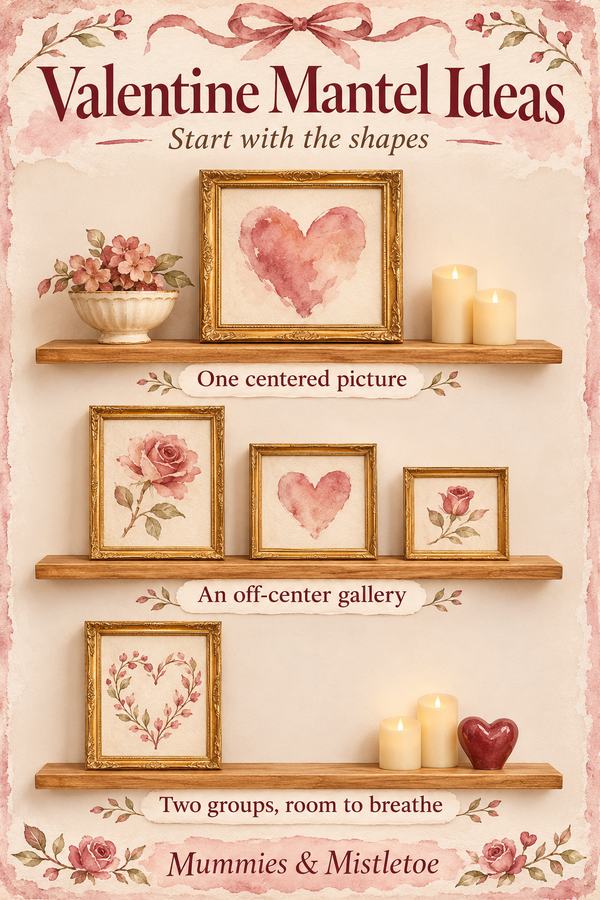
Choose one main use for the heart shape in each space. A paper heart at a plate, a cushion with a simple heart or a drawing by the door will each read differently. You don't need all three in every room.
Keep paper away from food, water and heat, and preserve safe clearances around fireplaces and appliances. Put useful furniture back into use as you finish each arrangement. The sofa should invite someone to sit, and the table should still have room for dinner.
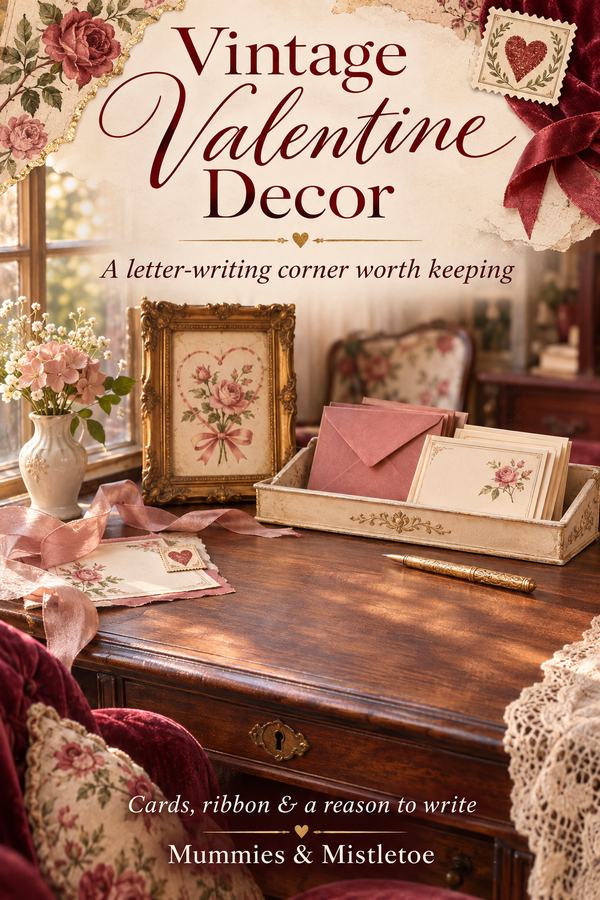
Let personal notes provide the details that store-bought decorations cannot. Write one for a place setting or tuck it beside a familiar mug. Keep its color within the plan and its words entirely your own.
Carry the Colors Into an Ordinary Morning
Set the next breakfast place with the napkin or mug from your chosen scheme. Leave the sitting-area textile ready to use and put keys in their usual dish. The three spaces will share a little color even before anyone notices the hearts.
After Valentine's Day, the same palette can stay. Put away the paper hearts and keep the colors you enjoyed living with.
If a mug is the small color accent you still need, browse the drinkware at Mummies & Mistletoe with your chosen palette beside you. Look for a design you'll enjoy after February too, and let the handwritten note supply the Valentine detail.