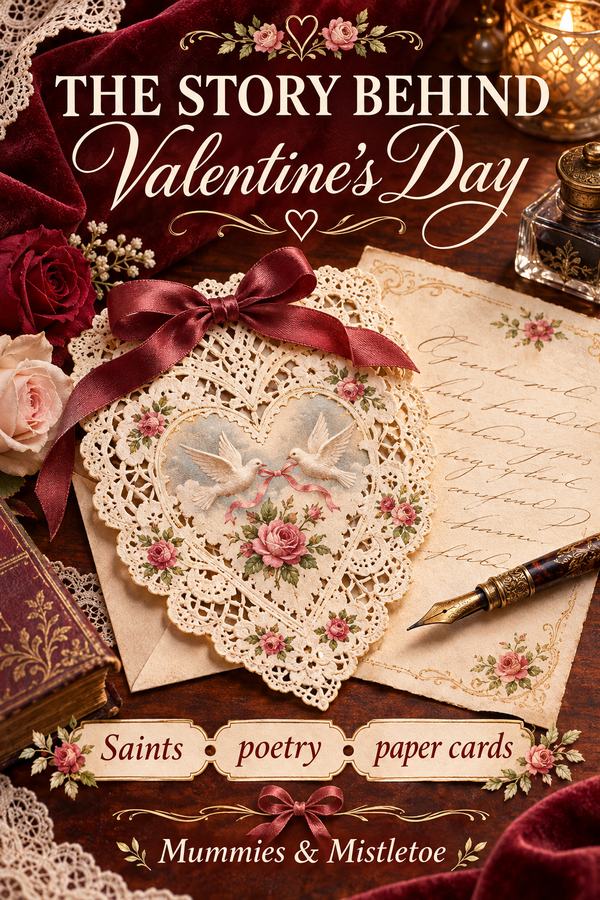
An old valentine can stop you halfway through opening a drawer. Its paper lace, little flowers or carefully written message make you wonder how a day for sending hearts began. The history of Valentine's Day has several strands, and they don't all join into one neat origin story.
There are saints behind the name, medieval poetry behind an early connection with romantic love, and surviving cards that show how people later expressed it. Looking at those strands separately gives us a more interesting story than treating one familiar legend as a complete explanation.
Several Saints Behind One Name
Penn State's account explains that there were several saints called Valentine, rather than one securely documented figure whose life explains the modern holiday. The saints it discusses were associated with Christian devotion and martyrdom, not a straightforward romantic biography.
The name belongs to the saints' stories; the romantic customs come into view later. Following those threads separately lets the surviving evidence show how the celebration changed.
That gap is part of what makes the history interesting: a familiar name eventually came to belong to a very different kind of celebration.
Follow the Birds Into Medieval Poetry
UCL's discussion of Middle English literature points to Geoffrey Chaucer's Parliament of Fowls as an early recorded link between Valentine's Day and love. The late-medieval poem imagines birds gathering to choose their mates. It's a much more particular picture than a modern aisle of heart-shaped gifts.
Penn State's Chaucer specialist also cautions against assuming that the surviving poem proves Chaucer invented the custom. His audience may already have understood an association that he did not fully explain. The setting and the saint's day he intended have also prompted scholarly discussion.
That leaves a useful distinction: an early surviving reference is evidence of the connection, not a complete account of how it started. When you see birds on a valentine, you can think of that literary gathering without claiming that every bird design descends directly from the poem.
See What the Postal System Changed
London Museum describes how the penny post made sending cards easier and cheaper, and how businesses in central London produced both cards and their components. That helps explain an important practical part of the story. Affectionate messages need a way to travel, and a more accessible postal service gave card sending room to grow.
The museum's example, object 34.170/89, is attributed to John Windsor and made with embossed lace paper, gilded details and a satin center. Flowers, doves and pairs of lovers surround the central verse. Its small size, about 3 by 4¾ inches, makes the amount of detail especially striking.
Looking at an object record can change the way you see a card. You begin to notice the layers, the border and the space saved for the message. The envelope held a small piece of designed paper, with a maker's choices in every part of it.
Look Beyond the Sweetest Victorian Cards
The V&A's overview shows that the range of valentines was wider than gentle flowers and lace. Its collection includes mechanical cards, delicate paper structures and objects shaped like hearts. Some cards were made to move or reveal something, giving the recipient another action beyond reading the front.
The museum also discusses insulting examples often called vinegar valentines. Alongside them, its featured mechanical card depicts a woman giving a letter. Sweet, elaborate and unkind messages all appeared in the same broad card-making culture.
For someone who enjoys paper crafts, the useful inspiration is in the variety of construction. A fold, a lifted flap or a layered border can give a message a sense of occasion. Try a small flap that lifts to reveal your own handwritten message, or layer a cut-paper border around a drawing.
Notice the Handmade and the Manufactured
The National Park Service describes the spread of valentine-card sending in the United States, including imported and mass-produced cards as the custom grew. It also describes people making cards at home from available materials. Purchased and handmade versions both belong in the story.
Its account notes that cards were exchanged with friends and family as well as romantic partners. A friendly note to a sibling or grandparent belongs alongside the romantic card in this wider history of exchanging messages.
A surviving card can tell us something about paper, printing and the words someone chose. It can't tell us every thought of the sender or recipient. When you read an old message, leave room for the ordinary private relationship that the object only partly reveals.
Bring One Detail to Your Own Table
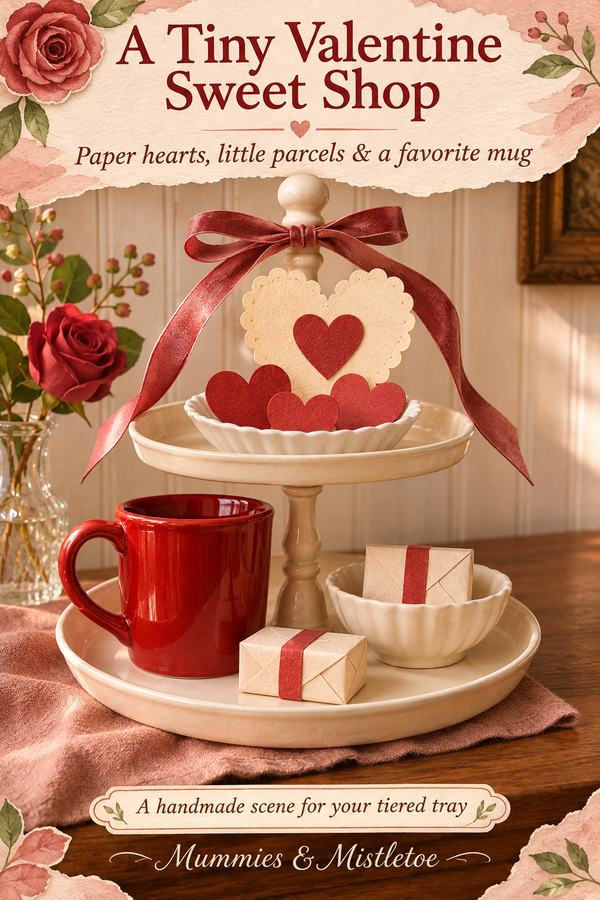
Borrow one detail: a scalloped paper edge, a flower drawing, a small folded flap or a handwritten line in the center. Use a fresh sheet of card and make something for a person you know. A personal message will give the design its purpose.
If you're displaying an old family card, use a copy for cutting or gluing and keep the original intact. For an image from a museum website, check the specific rights before printing or sharing it. An old object does not automatically make every modern photograph of it free to reuse.
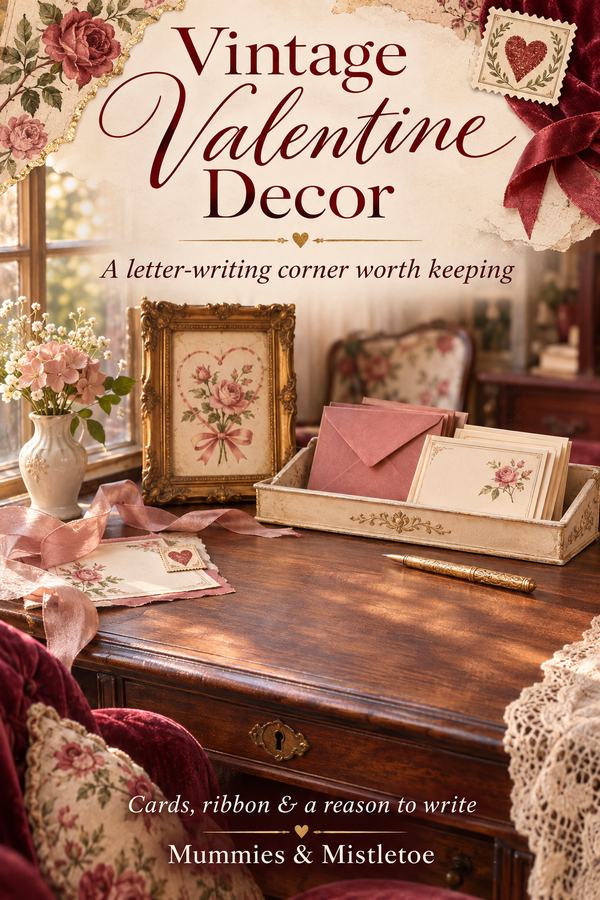
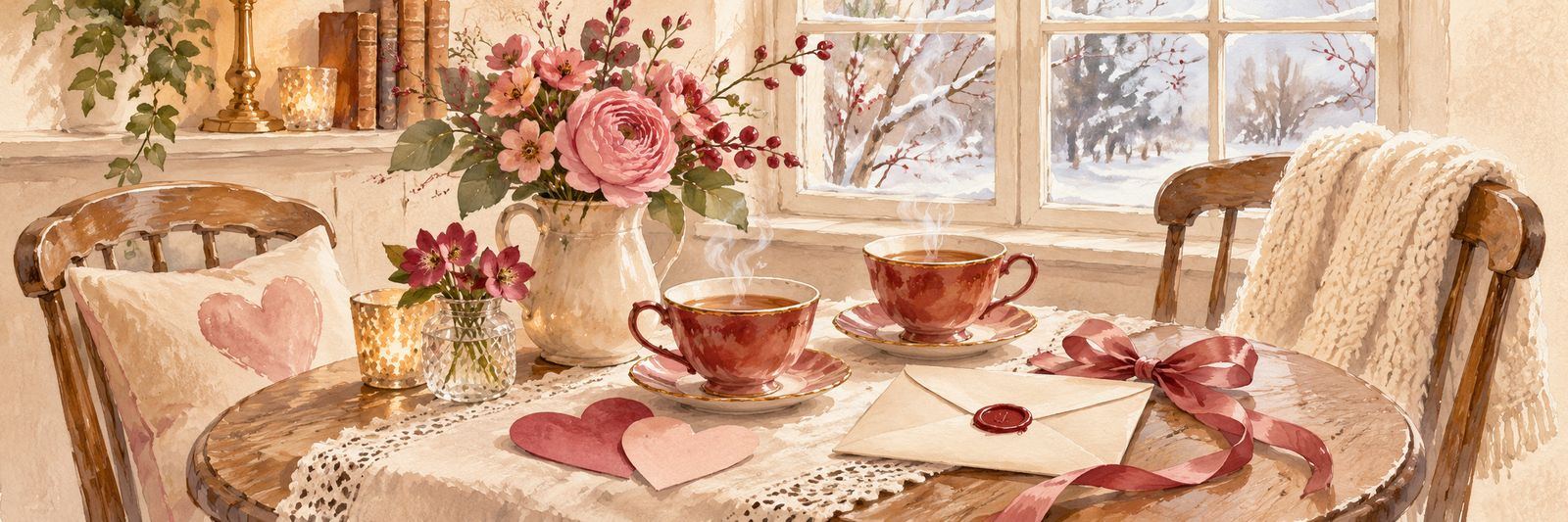
Write one detail you appreciate about the recipient, then date your card before sealing it. Someone opening a drawer years from now may find your paper flowers and wonder about the afternoon you made them.