Leave a Pause Between the Preparations
The clothes for tomorrow are laid out, and the kitchen still has a few jobs waiting. The meaning of Holy Saturday can get lost between Good Friday and Easter morning, especially when the household is busy preparing to welcome people.
You can make room for the day without turning the whole afternoon into an observance. Choose a short pause for reading, one act of care and a practical stopping point for the preparations. Let your church’s tradition guide any formal worship, while home remains a place to rest and get ready.
Holy Saturday in the Easter Story
Holy Saturday is the day between Good Friday and Easter Sunday. Christians remember Jesus lying in the tomb, and the day carries a sense of waiting before the celebration of the resurrection. The Church of England’s Holy Saturday guide describes this place in Holy Week and the movement toward the Easter Vigil.
Read Luke 23:50-56 in the World English Bible. Joseph takes Jesus’ body, wraps it in linen and lays it in a tomb; the women see where he is laid, prepare spices and rest on the Sabbath. The next chapter begins with their return at dawn on the first day of the week.
Stay with that sequence for a moment. There is a burial, a pause and then a return. Let the pause be part of what you notice together.
Choose a Reading Pause That Fits Your Household
Set aside ten minutes after lunch or before the evening begins. Put the Bible on a table and turn off the background sound if that helps everyone listen. Read the short passage once, then allow a little silence without timing it as a test.
Invite each person to name something they noticed in the reading. An adult might notice the care shown to Jesus’ body; a child might notice the spices or the people resting. Let the conversation follow one observation instead of moving through a list of questions.
If you’re keeping the day on your own, write a few sentences after reading. You might record what you find difficult about waiting, or the name of someone who is facing uncertainty. The page doesn’t need an answer at the bottom.
Prepare for Easter With a Definite Finish
Write down the three things that would make tomorrow easier. Your list might be setting out breakfast bowls, checking the service time and putting the guest towels in place. Finish those before adding another decoration or recipe.
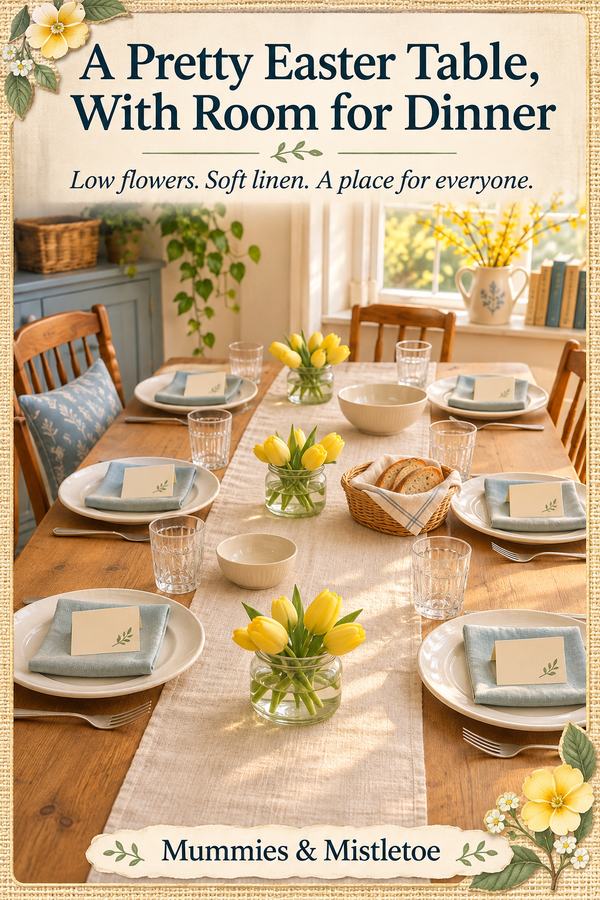
Give each person a task with a visible end: four places set, a bag packed for church, or a stack of napkins folded. For a child, laying out a favorite outfit may be enough. Give the essential jobs a finish so there is room to rest in the evening.
If a basket is part of your family’s Easter celebration, fill it during this preparation period and put it aside. A plain cloth over the contents can keep tomorrow’s surprise separate from today’s pause. The basket can be ready without becoming the center of the reflection.
Offer Care Without Turning It Into a Project
Choose one person who might welcome a small contact. Send a brief message, arrange a call or ask whether a meal would help before bringing one. A useful message might be, “You’re on my mind today. There’s no need to reply, but I’m here if you’d like company.”
Let the person set the terms of the conversation. Someone who is grieving may want to talk about a name or memory, while someone else may prefer ordinary news. Don’t use the occasion to promise that a difficult situation will resolve by a particular time.
At home, care may look like taking over the dishes so another person can rest. You can do that quietly, without asking everyone to report a good deed afterward. An ordinary kindness belongs in the day just as well as a planned visit.
Make a Plan for the Vigil or Evening Prayer
Some churches hold an Easter Vigil after sunset on Holy Saturday, and some observe it early on Easter morning. The Church of England describes the lighting of the Easter candle as part of its vigil tradition. Other churches arrange their services differently, so check your own congregation’s details rather than assuming a start time or format.
If you’re attending with children, find out how long the service is likely to be and whether there is a suitable place for a quiet break. Pack what your family usually needs. Explain beforehand if the church will begin in darkness or include a procession, so those features don’t arrive as a surprise.
If you remain at home, a short evening prayer is enough. You might say, “God, be near to those who are waiting and those who are grieving. Help us rest in your care tonight. Amen.” These are suggested words for home, not a replacement for your church’s liturgy.
Let the House Be Ready Enough
Before bed, put tomorrow’s reading where you can find it. Luke 24:1-8 is one option for Easter morning, continuing the account you began today. You can read it before breakfast or later, when everyone is able to listen.
Leave the last unnecessary job undone if it is taking the whole evening. The bowls are waiting on the table, the service time is written down and the Bible has its place marked for morning.