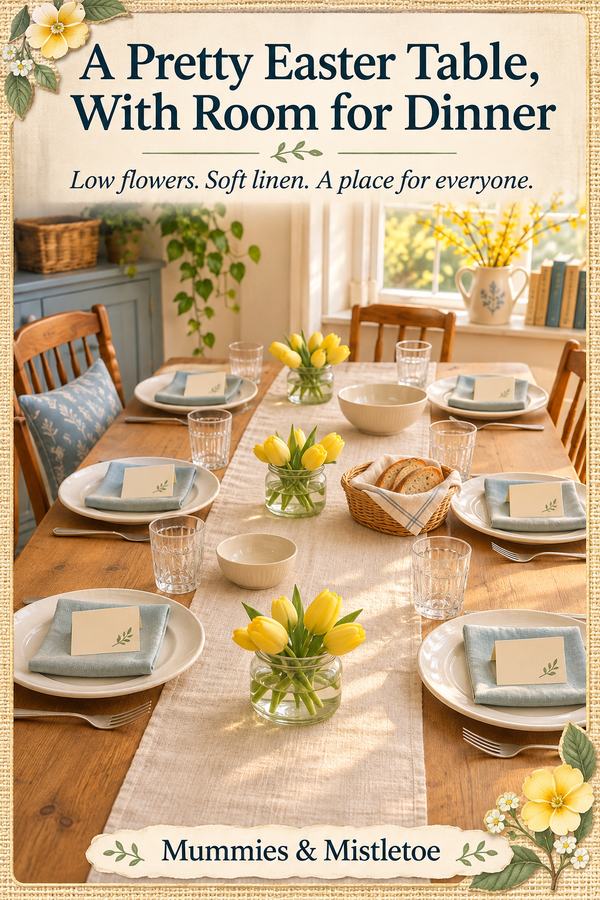
Set the Table Before the Evening Gets Busy
Set an extra place for a small act of care at supper tonight. A Maundy Thursday family dinner, on the day also called Holy Thursday, can fit into that ordinary work, giving the family time to eat together and notice how they care for one another.
Plan it around any church service you attend. If the evening is already full, have the reading over an early supper and leave the longer conversation for another day. This is a home meal and reflection; follow your church’s guidance for Communion and any other formal observances.
Choose One Supper Everyone Can Eat
Build the meal from familiar food. For four people, one possible plan is four generous bowls of a soup your family already enjoys, a loaf of bread or rolls, and a bowl of cut fruit. Use your usual recipe or package servings to decide how much soup to prepare, and account for appetites and dietary needs.
A second option is a baked-potato supper with beans or vegetables. Choose ingredients that fit your church's fasting guidance and your household's needs; many Orthodox fasting practices exclude dairy as well as meat. Set the toppings in separate bowls. These are menu ideas for a home supper, rather than a reconstruction of Jesus’ final meal.
Choose the menu the day before so the reflection isn’t competing with an unfamiliar recipe. A child can wash fruit or count napkins while an adult handles hot food. If someone comes home late, reserve their serving before the dishes reach the table.
Set a Simple Supper Table
Lay a washable cloth or runner down the table, then set one plate or bowl, a drinking glass and a napkin at each place. Put the bread within reach instead of creating a tall centerpiece. A plain serving bowl and the texture of the cloth can give the table enough shape on their own.
If you like a more intentional setting, fold the napkins into rectangles and place one beside each bowl with the spoon on top. Use a battery candle for a little light without adding an open flame near passing hands. Leave space for a Bible or reading card at the reader’s place.
A seasonal tablecloth can become the piece you bring out for these shared meals. Choose a pattern quiet enough that food and faces remain the focus, and a fabric you’re willing to wash afterward. The table should still be comfortable for a dropped crumb or a second helping.
Read About Service Before Eating
Read John 13:3-5 and 12-15 in the World English Bible. The passage describes Jesus washing his disciples’ feet and speaking about the example he has given them. Ask everyone to listen for what he does with the towel and water.
Follow with John 13:34, where Jesus gives his command to love one another. You don’t need to read the entire chapter aloud to connect the action with the instruction. An older child who wants the wider context can read it with you afterward.
Keep the conversation close to what the family understands: someone notices a need, takes time and does the work. Invite each person to name an ordinary act of care they have received recently. It might be a packed lunch, a ride, help with a difficult task or a patient answer.
Let Everyone Offer One Useful Kindness
Before the meal, assign small jobs by ability: filling water glasses, setting out napkins, carrying cool bread or asking what another person needs. Adults can take the jobs that involve heat, lifting or knives. Choose jobs that genuinely help the meal come together.
During supper, invite each person to choose one act of care for later in the week. Make it specific enough to carry out: reading to a younger sibling, bringing in a neighbor’s bin with permission, or calling a relative who enjoys hearing from them. Write the idea on a small card if remembering it will help.
Give each small offer time to be heard. Someone who needs help themselves can still offer company, attention or a kind message. Care can move in both directions around the same table.
Make Room for Your Family’s Tradition
Some families include foot washing at home as part of their observance. If that is your practice, follow your congregation’s guidance, explain it beforehand and make participation voluntary. The ordinary serving jobs above remain a complete option for a household that doesn’t include it.
Don’t ask children to reenact betrayal or pick someone to play an unwanted role. They can hear the Gospel account without being placed inside every part of it. A calm explanation and an open invitation to ask questions are enough for this evening.
If your household includes different beliefs, explain the reading as part of your own faith and let guests choose how to participate. Sharing the meal and helping clear it need not depend on everyone offering the same prayer.
Clear the Table Together
End the meal with a short prayer you can say in your own words: “Jesus, thank you for the love you show us. Help us notice where someone needs our care, and give us willing hands. Amen.” Leave a moment for anyone who wants to add a name.
Carry the plates to the kitchen together and save any care cards where they’ll be seen. Set aside any stained cloth for washing, and leave the care cards where they will remind you of the small promises made over supper.