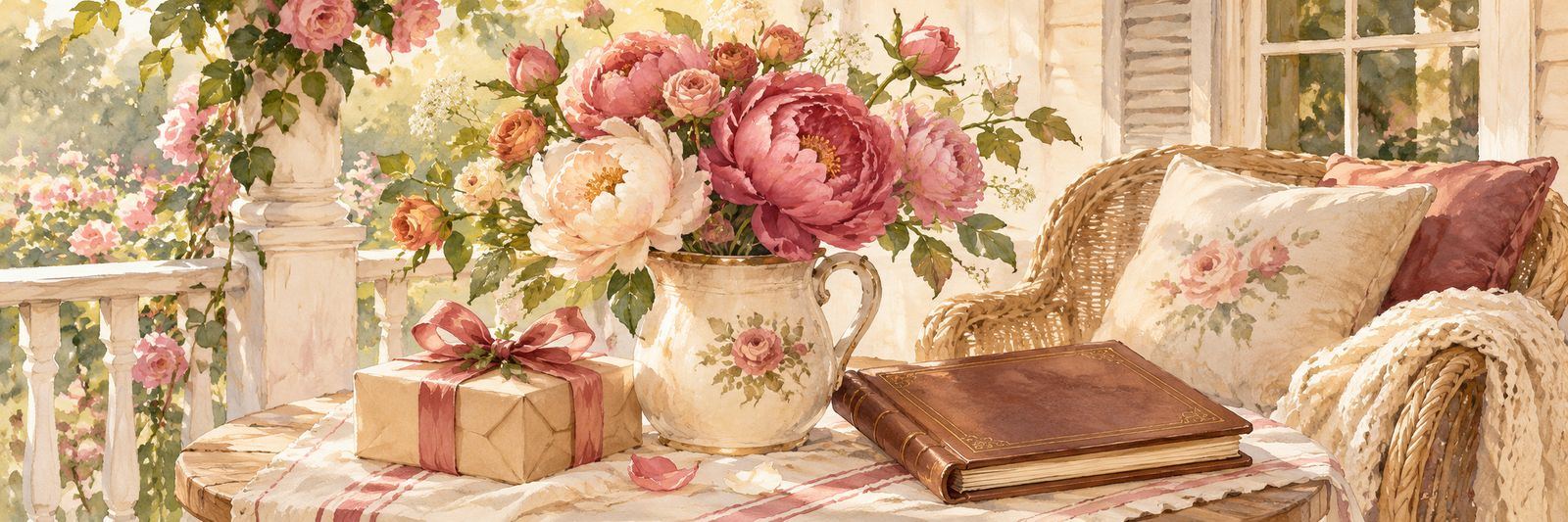
The recipe card has a little flour caught in its corner, and the photograph beside it has a name penciled on the back. Those ordinary family pieces can become Mother's Day keepsake gifts with a bit of care. The aim is to make something she can recognize at a glance and enjoy in the room where she spends time.
Choose one memory before choosing a frame or a box. A clear connection matters more than a large collection. These three approaches use handwriting, a photograph or a short family story without turning an irreplaceable original into a craft supply.
Choose a Memory She Would Welcome
Think about a memory she tells happily, a person she likes to talk about or a recipe she still makes. Ask a quiet question if you're unsure. A surprise gift doesn't need to surprise her with a painful or private story.
For a family photograph, check who is pictured and where it was taken before writing a caption. Ask someone who knows rather than filling in a likely answer. If the information remains uncertain, leave that detail out and describe what you do know.
For handwriting, choose a short piece that can be read at the intended display size. A whole letter reduced into a tiny frame may lose the very feature you want her to see. A few meaningful lines can make a better focal point.
Turn a Recipe Into Kitchen Art
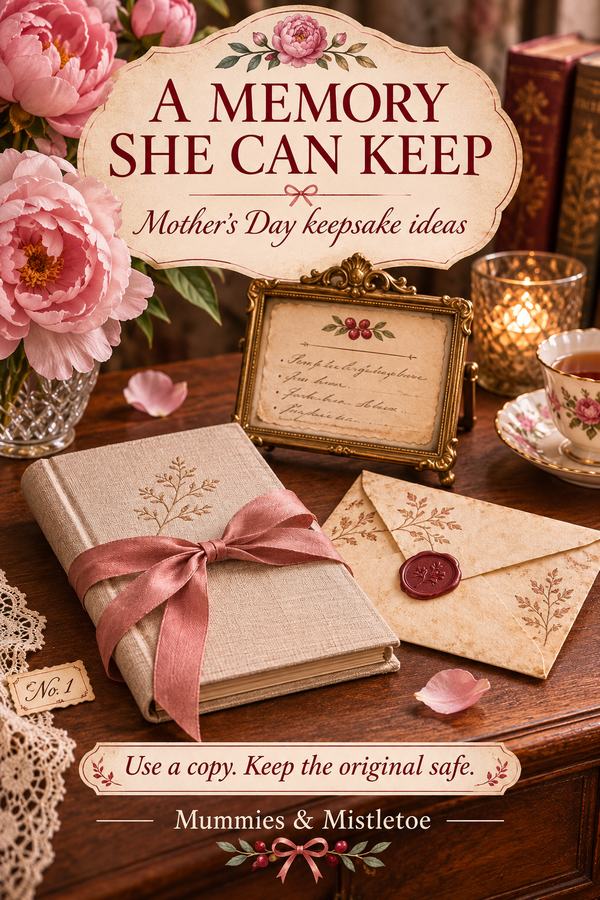
Make a good-quality scan or photograph of the recipe card, keeping the original flat and intact. Photograph it straight on in even light, without a shadow from your phone. Check the result closely enough to see the smallest writing before ordering or making a print.
Print a copy to fit a frame she has room for, leaving a border around the handwriting. An 8-by-10-inch frame with a smaller opening can work for a compact card, but check the actual opening and print size together. Keep the card's edges visible if their worn shape is part of what makes it familiar.
Add a separate note about why you chose it: "This is the cake we always asked for," or "I remember watching you make this at the kitchen counter." Tuck the note into the gift package, leaving the handwriting unobscured.
Display the finished copy away from splashes and cooking heat. Return the original to its usual safe storage instead of leaving it behind the kitchen frame.
Give a Photograph Enough Context
Choose one photograph with a recognizable face or moment, not necessarily the most formal portrait. A picture of her teaching a child to stir, laughing beside a garden gate or reading with a grandchild can carry a story on its own. Use a duplicate print for the gift and preserve the original.
Write a caption on a separate card with the names and place you have verified. Include a sentence about what the photograph means to you. Keep that card behind the frame or in the wrapping so the display itself stays uncluttered.
Check the crop before printing. Don't let a frame opening cut through the person's hands or remove the detail that explains the scene. A wider border is often preferable to enlarging the picture until the edges disappear.
Make Mother's Day Keepsake Gifts From One Shared Story
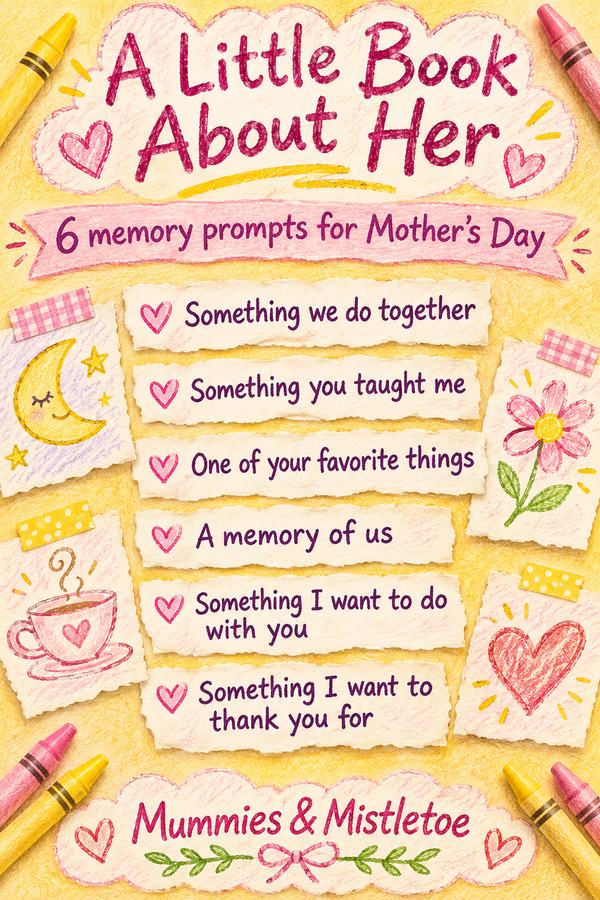
Ask two or three family members for a short memory of the same person or occasion. Give them a specific prompt, such as a meal she made, a phrase she used or a way she helped. A few sentences from each person are easier to read than a request for a full life history.
Gather the responses into a small booklet, keeping each writer's name with their contribution. Ask before changing someone's wording beyond correcting an obvious typing error. If a memory is sensitive or involves someone else's private life, leave it out unless the people involved are comfortable including it.
Use a plain cover with a short title, such as "Around Your Kitchen Table." Add a copy of one photograph if it belongs with the story. Leave the booklet beside her reading chair, ready to open to a familiar photograph or a few lines from someone she loves.
Give Her Room to Add Her Own Version
Let the keepsake open a conversation. Put a few blank pages at the back of a booklet so she can add a name, a different recollection or a detail the rest of the family missed. Invite her to contribute only if she wants to.
If she enjoys writing longer memories, pair the framed piece with a lined journal chosen in her taste. Tuck a loose card inside with one prompt: "What do you remember about this day?" Leave the rest of the pages open for whatever she chooses.
Avoid turning the gift into homework. Offer to sit with her and write down a story another time, or simply let the photograph be something she enjoys seeing. Her response doesn't have to become a new project.
Finish the Display Before Wrapping
Set up the frame or booklet and look at it from the distance where it will be used. Make sure the writing is readable, the stand works and the piece has an obvious front. Include fitting instructions for any hanging hardware the piece needs.
Keep original photographs and papers separate from glue, tape and new decorations. For fragile or valuable family material, use a copy and seek suitable preservation advice for the original. The finished gift should not put the source memory at risk.
Wrap the piece with the explanatory note on top. When she opens it, the handwriting, the faces or the first familiar sentence will already be there waiting for her.
For someone who loves botanical details and darker colors, our Owl and Roses journal can hold the stories that follow the photograph. Its lined pages leave room for her own handwriting; your first memory can stay on a loose card tucked inside.