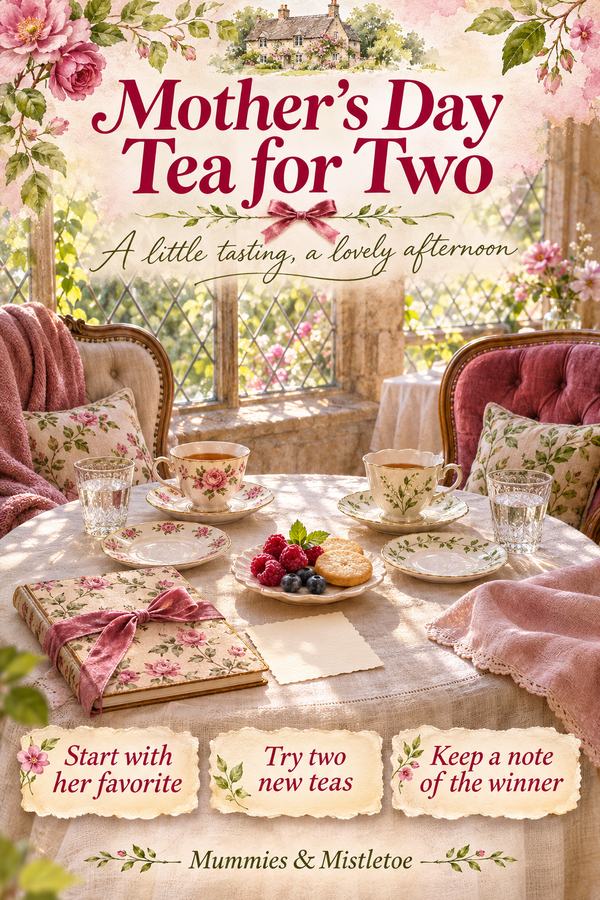
Three small packets of tea are waiting beside the kettle, with two favorite cups ready on the table. A Mother's Day tea party can be this small: a few different teas, something to nibble and an afternoon spent finding out which cup she likes best.
This tasting is for two people, with room to add another pair of guests. You don't need matching china or a large menu. Put your attention into the choices, the brewing and the time at the table, so she can sit down without having to organize any of it.
Choose Three Teas With a Reason
Start with a tea she already enjoys. That familiar cup gives you a useful point of comparison when you try the next two. Ask about caffeine preferences and any ingredients she avoids before buying the samples.
Choose the second tea by changing one thing she might enjoy exploring. If she likes a plain black tea, try a similar tea with a flavor she likes. For the third, choose something different enough to invite a conversation, perhaps a fruit infusion she has mentioned wanting to try.
Buy small quantities where possible. Three large boxes can leave her with a cupboard full of tea she didn't choose. Keep every ingredient list and brewing instruction, and give her the remaining tea only if she wants it.
Set Up a Mother's Day Tea Party Tasting
Use a clear section of the table for two place settings and a central space for the tea. A cloth in a soft color can make ordinary cups feel at home together. Keep flowers off to one side so their scent doesn't compete with what you're tasting.
Set out a cup for each person, drinking water, a teaspoon and a small plate. You can rinse and reuse the cups between rounds. If you already have six cups of a similar size, arrange them in three pairs and put a small numbered card beside each pair.
Keep the kettle and brewing equipment on a nearby counter. Put the tea packets there in serving order, with a timer and a place for used bags or leaves. Read each package before the afternoon begins so you aren't trying to work out three sets of instructions while she waits.
Make One Small Food Plate
Choose a few familiar foods rather than turning the tasting into a second lunch. For two people, a possible plate is four small sandwich pieces, two plain biscuits or scones and a handful of berries. Adjust it to what you both enjoy and what you've already eaten.
Bring out strongly flavored foods after the first sips if you want to notice differences between the teas. A plain bite and some water between cups give you a pause. Serve milk, lemon or sweeteners separately so each person can try the tea first and then make it their own.
Use food you already know how to prepare or buy it ready to serve. Keep anything that needs refrigeration chilled until it's time for the plate to come out. The tasting is the activity; the food can stay uncomplicated.
Brew Each Tea on Its Own Terms
Follow the temperature, quantity and steeping time printed on each package. Prepare each tea when you are ready to taste it. A kitchen timer lets you pay attention to the conversation without losing track of the pot.
Make a modest amount for each round. If your teapot is much larger than the amount you need, use a suitable smaller brewing vessel instead of guessing at an oversized pot. Leave room in each cup for safe carrying and any additions the drinker wants.
Let the cup cool enough to sip comfortably. Try it before adding anything, then try it the way you usually drink tea. Everyday descriptions work well: one may taste too sharp, while another would be lovely with breakfast.
Write Notes You Can Actually Use
Put three short prompts on a piece of paper: what you notice, what you would add and when you would drink it. The answers might be as simple as “smells like oranges,” “a little milk” and “after lunch.” Write the tea's actual name beside the notes so you can find it again.
Compare the second cup with the first using everyday words. Is it stronger, lighter, sweeter-smelling or more bitter to you? A difference of opinion gives you something to talk about without needing to settle who is right.
If she likes keeping notes, use a page in a notebook she already owns or tuck a loose tasting card inside a journal. Leave the page mostly open. Recording a favorite may be all she wants to do.
Let Her Choose the Final Pot
After the three small tastings, ask which tea she'd like a full cup of. Make that one while she chooses something from the food plate. Put the numbered cards away and let the rest of the afternoon become an ordinary visit.
For four people, keep the same three teas and increase the food and brewing quantities to suit your vessels. One person can pour while another handles the timer. Avoid adding more varieties just because the group is bigger; three cups leave time to enjoy the conversation.
Before she leaves, copy the name of her favorite onto a small card, along with the way she liked it prepared. Tuck it beside the remaining sample, if she'd like to take it home, so she can make her favorite again.
If she enjoyed keeping the tasting notes and loves botanical artwork, the Owl and Roses journal gives them a home on lined pages. Slip today's favorite tea card inside so the first entry is already connected to your afternoon together.