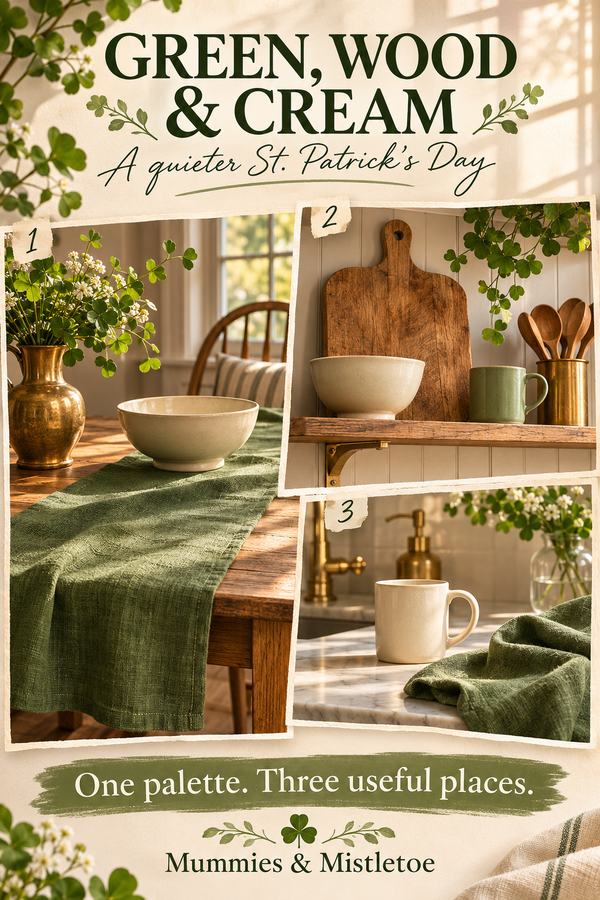
The kitchen already has cream bowls, a wood board and a tea towel you like. Simple St. Patrick's Day decor can build from those things, with one green textile and a small paper detail to mark the occasion. You don't need to turn every object into a shamrock to make the room feel seasonal.
This plan changes three small areas: the eating table, one shelf and the place where you make a drink. Choose the parts you actually use. Leave the things you use for breakfast and washing up easy to reach.
Choose Your Main Green
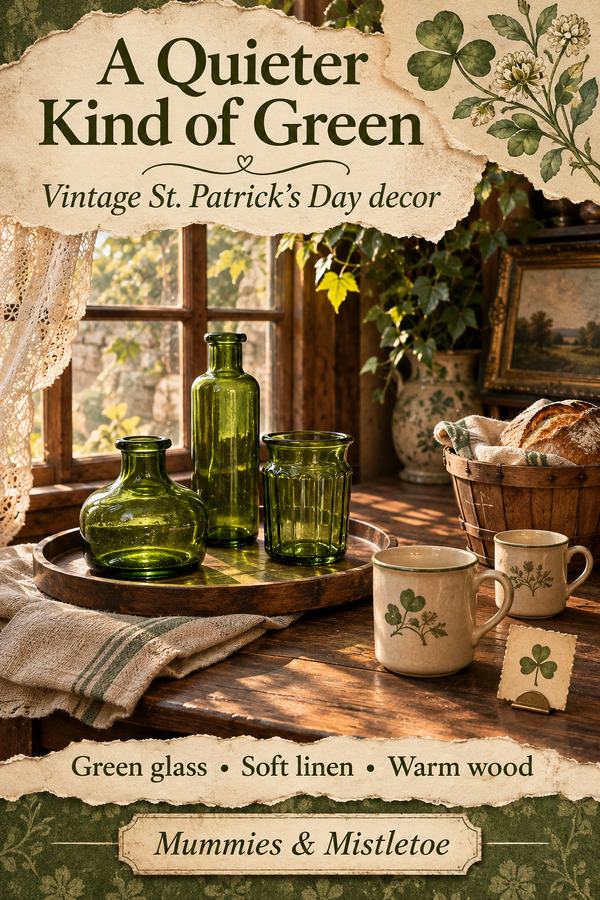
Look at the greens already in the kitchen, such as a bowl, a plant pot, a tea towel or the view through the window. Choose one direction: a deep bottle green, a softer sage or a clear grass green. You can include variations, but having one main shade makes the decisions easier.
Pair that green with cream and the wood tones already in the room. A little brass or warm-colored metal can join the palette if it's part of your normal hardware or utensils. Warm metal already in the room can supply the gold note.
Lay the possible pieces together on the table before moving them into place. Remove anything that feels unrelated to the color plan or has no place to be used or displayed. This is a small seasonal arrangement, so a few good connections will show more than a collection spread thinly across every surface.
Give the Table One Textile Change
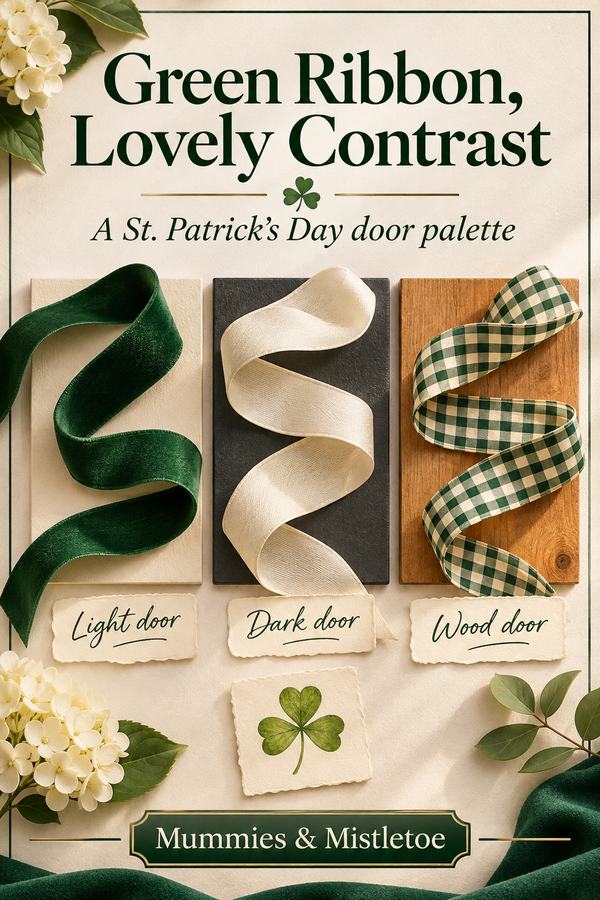
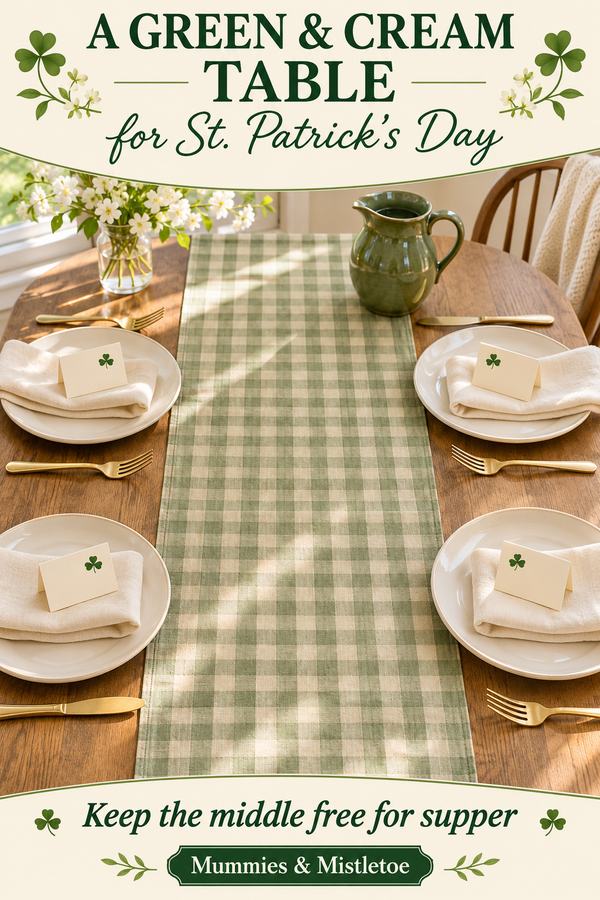
Choose a green runner, a pair of cloth napkins or a tea towel used as a small decorative layer beneath a tray. Check that the textile is suitable for the role you're giving it, and keep hot dishes on appropriate trivets. A runner is useful when you want the color to be visible even with the table set.
If the textile is patterned, use plain bowls or plates nearby. If it's plain, a checked napkin or striped cup can add a second detail. Avoid combining several strong patterns in a tiny space unless you enjoy that busier look.
A seasonal runner can become the main color cue for the room, making it a sensible item to reuse across more than one occasion. Choose a length that leaves room for the plates and chairs, with care instructions that fit your household. Leave the chairs and place settings comfortable to use.
Arrange a Shelf With Three Familiar Objects
Choose a short section of shelf and place a wood board at the back, with a cream bowl in front and one green item beside it. The green piece could be a small vase, a cup or a folded cloth. Use objects that can stand securely without leaning against something that will be removed during cooking.
Vary the heights enough that you can see each piece. If the wood board is too tall for the shelf, lay it flat under the bowl instead. A shelf arrangement should fit its space, not require the objects to balance at awkward angles.
Keep frequently used dishes accessible. If you reach for the cream bowl every morning, place it at the front and let the display change when you use it. The arrangement can be reset in a few seconds without becoming another task before breakfast.
Make One Small Paper Pennant
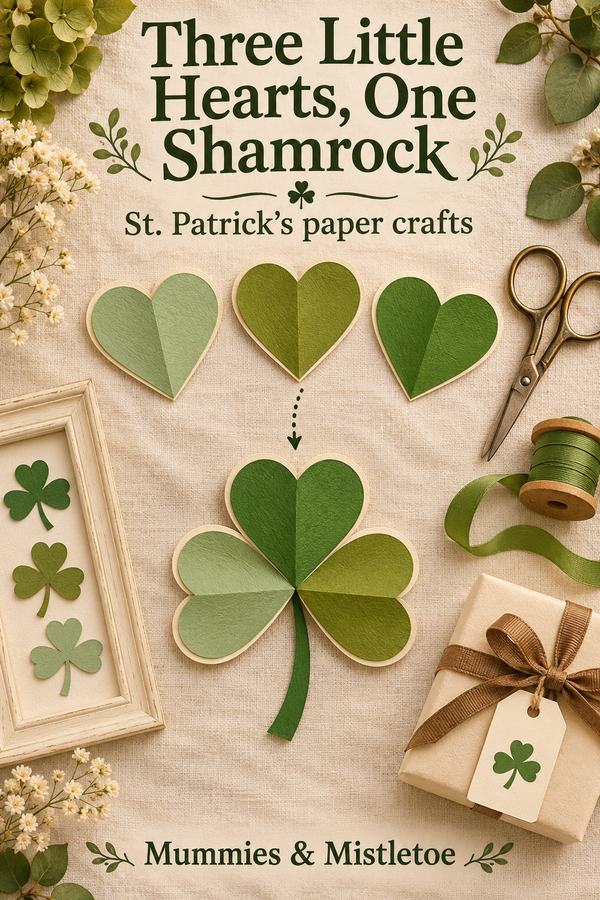
Cut a rectangle of sturdy cream paper about 4 by 6 inches. Remove a shallow triangle from one short end to make a pennant shape, then draw a narrow green border. Write a short greeting or leave the center plain with a simple green heart.
Attach the pennant to a small stand or clip it to an existing display board. Keep it away from cooking heat, water and appliance vents. You can use a small shamrock instead of the heart if you want the occasion to be more explicit, but the green color can carry most of the effect.
For a more personal version, write a note about a meal or visit you're looking forward to. The paper becomes a reminder of something happening in your home rather than a slogan chosen only because it matches the season. Keep the lettering large enough to read from the nearby chair.
Repeat the Color at the Drink Station
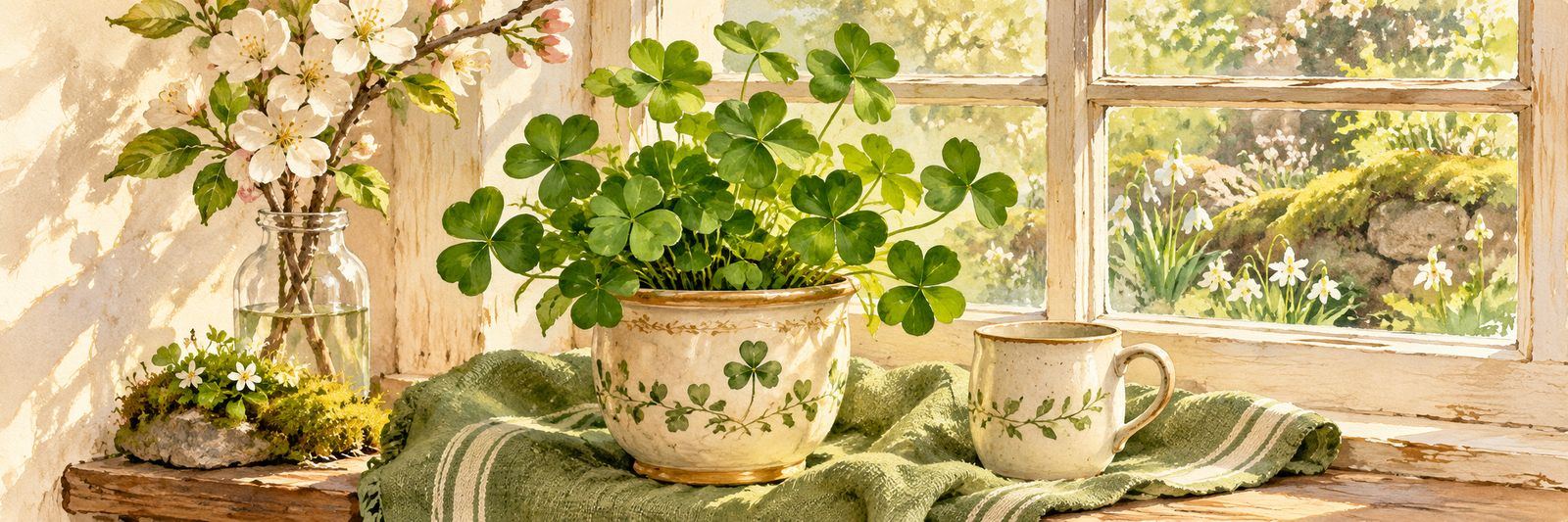
Put a green or cream mug beside the place where you normally make tea or coffee. Add a folded napkin or small cloth in the chosen green, positioned where it won't interfere with the appliance. Keep the rest of the setup practical, with spoons and ingredients in their usual reachable places.
If you have a small plant there already, consider its light and care needs before moving it for the display. Don't place a plant where leaves or soil can fall into food or drinks. An artificial stem in a stable vessel can give a similar visual detail if that suits the space better.
The mug and cloth repeat the table's color in a useful part of the room. That repetition is what connects the areas without making them identical.
Keep the Pieces That Still Suit the Kitchen
After the occasion, remove the paper pennant and decide whether you still like the green textile on the table. Green, cream and wood can stay if they suit the room. There is no need to pack away useful objects simply because you first brought them together for a holiday.
Wash or store the textile according to its care directions. Put the small paper piece flat in an envelope if you'd like to reuse it, and return any borrowed serving dishes to their normal places. The room can shift back gradually as you use it.
Fill the cream bowl with something you were going to set out anyway, or leave it ready for supper. Hang the green tea towel where you can reach it from the sink and let the kitchen get on with its day.
For another season's small accent, explore Mummies & Mistletoe with your green, wood and cream arrangement in mind. A familiar base makes it easier to choose one detail you love without collecting a whole new set.