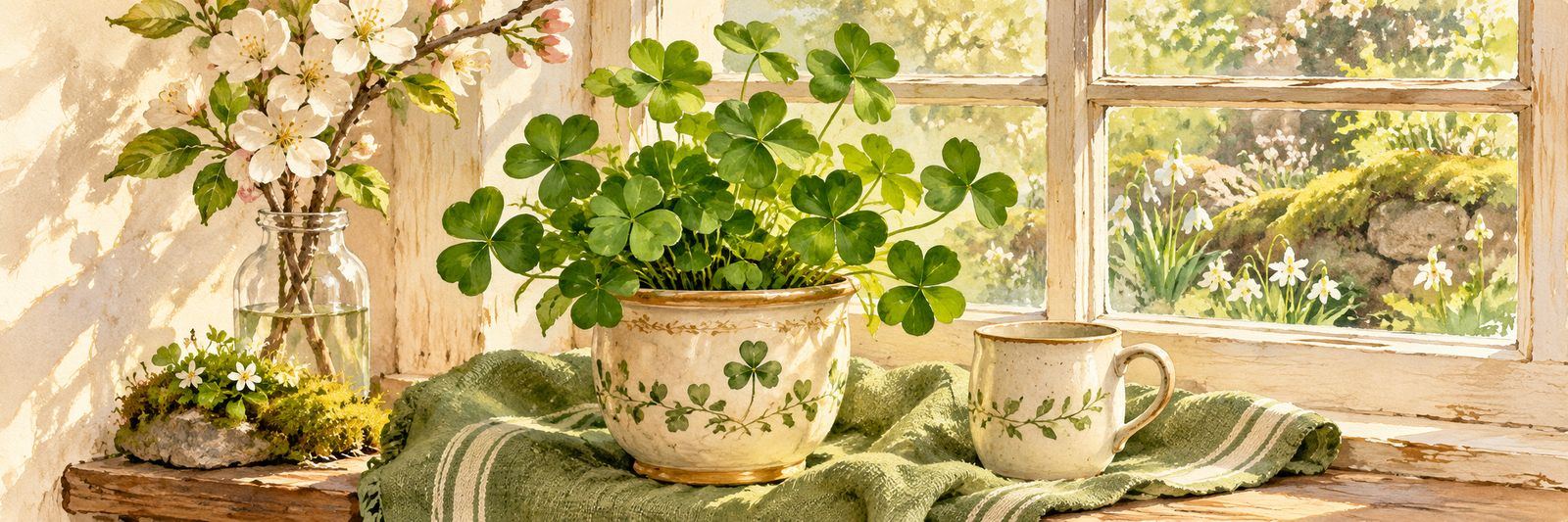
Vintage St. Patrick's Day decorating has room for more than shamrocks. An Irish landscape postcard, translucent green glass or a softly worn linen cloth can give the holiday a quieter, collected look. These three arrangements each celebrate a different material.
Each arrangement has a different focus. The shelf is for looking closely at an illustration, the window uses light through glass, and the dresser brings linen and wood into a working breakfast space. You can make one complete vignette with a handful of well-chosen pieces.
Choose the Piece You Want to Enjoy
For a shelf you pass closely, choose the postcard arrangement. For a bright indoor window with a safe display surface, choose the green glass. For a dresser or sideboard used near meals, choose the linen-and-wood breakfast setting.
Gather the pieces for that scene before arranging them. Older family objects, a favorite reproduction and newer plain pottery can sit comfortably together. Choose them for the colors and memories they bring to the room.
Keep fragile originals protected from direct sun, moisture and unsuitable adhesives. Use copies for display when appropriate. Any printed artwork should be your own or something you have permission to reproduce.
Vignette One: An Irish Postcard Shelf
Gather one framed Irish landscape postcard or purchased reproduction, a plain cream jug, a small brown book and a low wooden dish. A place you have visited, a view connected with family or a scene you simply love gives the arrangement its subject.
Use a shelf about 24 inches wide as a starting space. Put the frame slightly left of center, the jug to its right and the closed book flat beneath the wooden dish near the front left. Keep every object fully supported, with the illustration unobstructed.
Borrow one green from the picture for a narrow ribbon around the jug, if the jug is decorative and sturdy enough. Leave the other pieces plain. A cream backing around the card can separate a detailed landscape from the dark frame.
Stand close enough to read the scene, then step back to the doorway. If the card disappears at that distance, move the arrangement closer to a chair or doorway where its details can be enjoyed. This vignette rewards a closer look.
Vignette Two: A Green-Glass Window
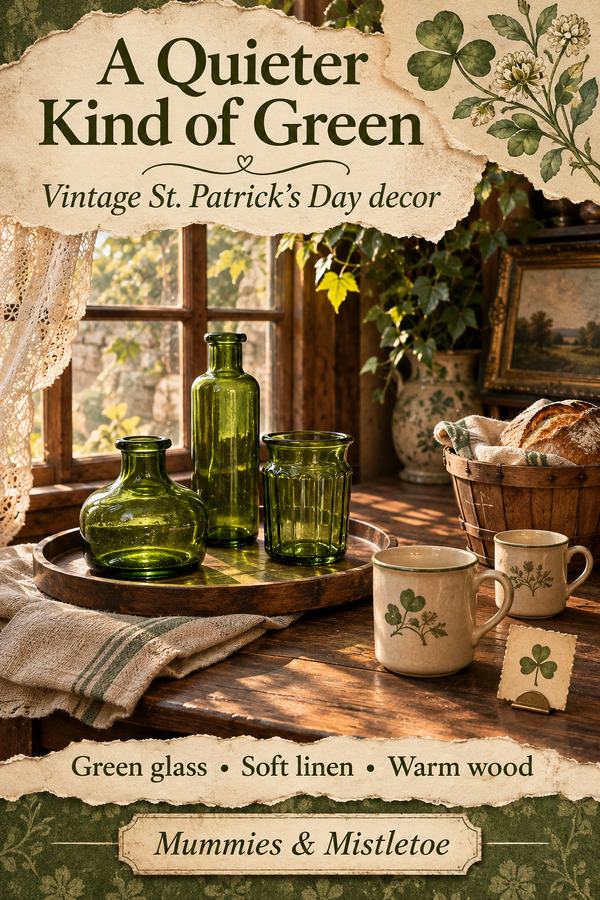
Gather three stable green glass vessels of different heights, a shallow tray with room for all three bases and a plain cream cloth. Bottles, small vases or jars can work, provided they are intact and safe for the location. Use a protected indoor surface where they cannot be knocked down or reached by children or pets.
Place the tallest vessel at the back of the tray, a medium one toward the left and the shortest toward the right. Leave a gap between them so light passes around each outline. Fold the cloth beneath one side of the tray, away from anything damp.
Keep the vessels empty for the first arrangement. Different thicknesses and shades of glass can give you enough variation without adding stems. Look at the group in morning and afternoon light, then turn the tray to find the view you prefer.
Use only a location suitable for the vessels and their finishes, away from intense direct sun if that could damage nearby materials. Keep door handles, blinds and window operation clear. The point here is the changing green light, not a permanent obstacle on the sill.
Vignette Three: A Linen-and-Wood Breakfast Dresser
Gather a wooden board or tray, two food-safe cups, a folded linen or linen-look cloth, a small bread basket and one flat paper shamrock. Use this as a ready-to-carry breakfast grouping on a dresser or sideboard, with the food added only when serving.
Put the folded cloth at the back of the tray and the cups side by side in front. Set the bread basket beside the tray, leaving the cups easy to lift. Stand the paper shamrock against the back of the display in a secure holder, separate from food.
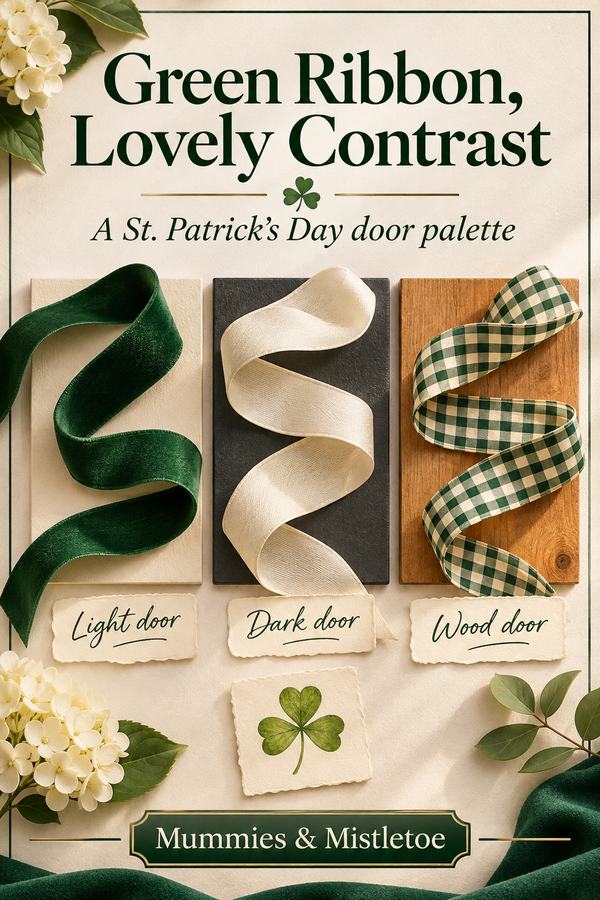
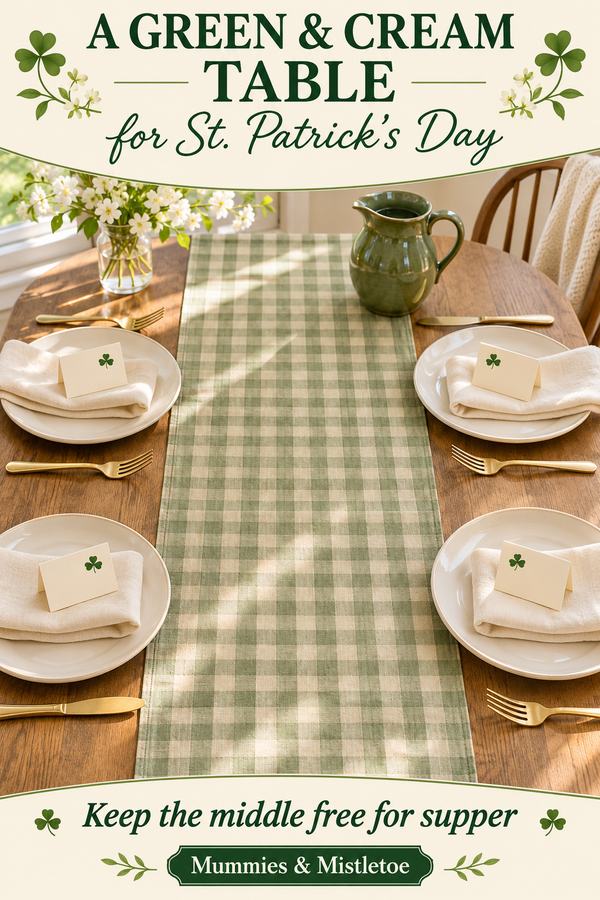
Choose cream cups and brown wood, then let the shamrock be the green accent. A green checked cloth gives a more patterned version; plain oatmeal-colored fabric makes the materials more noticeable. Keep the cup handles facing outward so the grouping can become useful at breakfast.
Use suitable dishes for serving rather than relying on an old vessel with an uncertain glaze. At mealtime, move the paper aside, add the bread and carry the tray to the table. The dresser scene has now done something beyond decorating the room.
Give the Three Scenes Different Supporting Materials
The postcard shelf needs a quiet surround for detailed paper, so keep its pottery plain. The window scene depends on translucent glass, so avoid adding opaque objects between the vessels. The breakfast dresser benefits from soft fabric beside hard wood and ceramic.
If you want two vignettes in the same room, repeat only one green between them. A ribbon color on the shelf can echo the darkest bottle at the window. Let the different materials keep the arrangements separate.
Keep original objects intact. Don't sand an uncertain old painted finish or alter a family textile simply to make it match. A newer plain object can fill a supporting role while the meaningful piece remains protected.
Make One Small Adjustment for Your Space
On a narrow shelf, use the postcard and jug only. On a broad window-side table, keep the three glass vessels together on their tray instead of spreading them across the width. For a breakfast space used by one person, use one cup and a smaller board.
Check the daily movement around each scene. Move the glass if a blind cord or handle reaches into it, and leave the sideboard's serving area available. These are finished arrangements that can change scale without accumulating more parts.
You can keep the green glass and linen after the holiday. Put away the shamrock, leave the pieces you love, and let the room ease into spring.
For seasonal accents to use beyond this March arrangement, explore Mummies & Mistletoe. Keep your wood, linen and favorite pottery as the familiar base, and choose only the small detail that gives the next occasion its character.