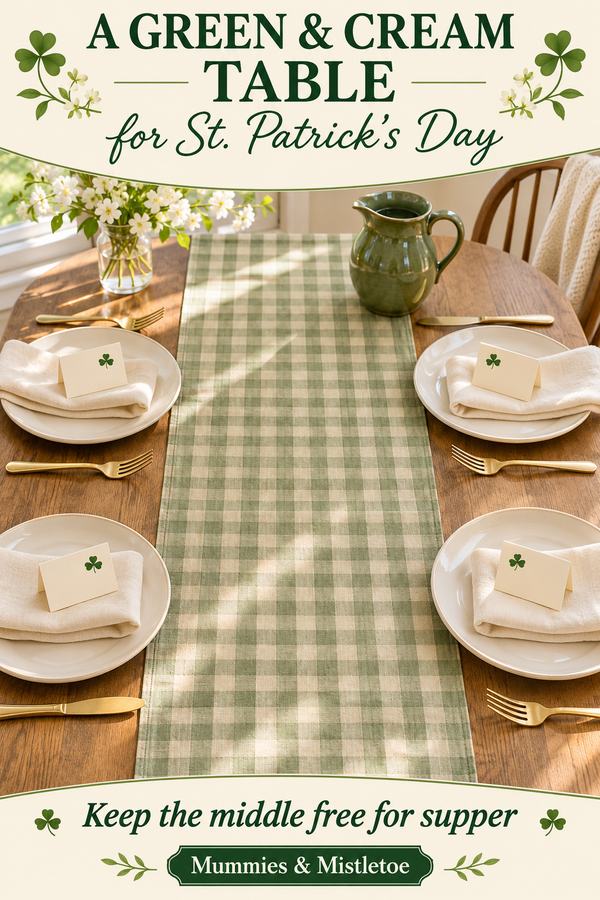
The white plates are already in the cupboard, and the table only needs a few green details to look ready for supper. St. Patrick's Day table decor can use checks, stripes and small paper shamrocks without covering every surface. This plan is for four people sharing food at the table, with decoration concentrated at the places rather than in a large centerpiece.
You'll make four checkered paper place mats, fold four name cards and choose one useful serving piece to carry the green. The paper work can be done ahead, leaving the table easy to set when dinner is nearly ready.
Leave the Center for Supper
Put the empty serving dishes on the table first, along with four plates and glasses. Choose a meal you already know how to prepare, then check where its hot dishes, bread or other accompaniments will sit. Have heat-resistant trivets ready for hot cookware.
For this layout, leave the middle of the table open for the food. Put the green details beneath and beside the plates, where everyone gets a close view. If your table is small, scale down the paper accents to fit within each person's setting.
A green runner can replace the paper mats if you already have one that suits the table. Measure it with the place settings in position and follow its care instructions. You only need one strong pattern, so plain name cards are enough beside a checked or striped runner.
Make Four Simple Checkered Paper Mats
For each mat, use a sheet of sturdy white paper about 12 by 18 inches. Cut eight green squares measuring 3 inches on each side, choosing one or two green shades. Lay the paper with an 18-inch edge across the top. Arrange four squares along that edge and four along the bottom edge, with about an inch between neighboring squares and 1½ inches at each side. This leaves a broad white area through the middle.
Glue the squares flat and let the mats dry fully. The gaps make a loose, check-inspired border. Place a plate on the first mat before making the others to see how much of the green remains visible.
Use the mats as decorative paper layers beneath plates, not as direct food surfaces. If you're concerned about spills, choose a washable place mat instead and use a small checked paper rectangle beneath the name card. The same color plan works without making paper the main surface at each place.
Fold Name Cards With One Shamrock Detail
Cut four pieces of cream cardstock measuring 4 by 6 inches. Fold each in half to make a standing card about 3 by 4 inches, then write one name on the front. Use dark lettering large enough to read from the chair.
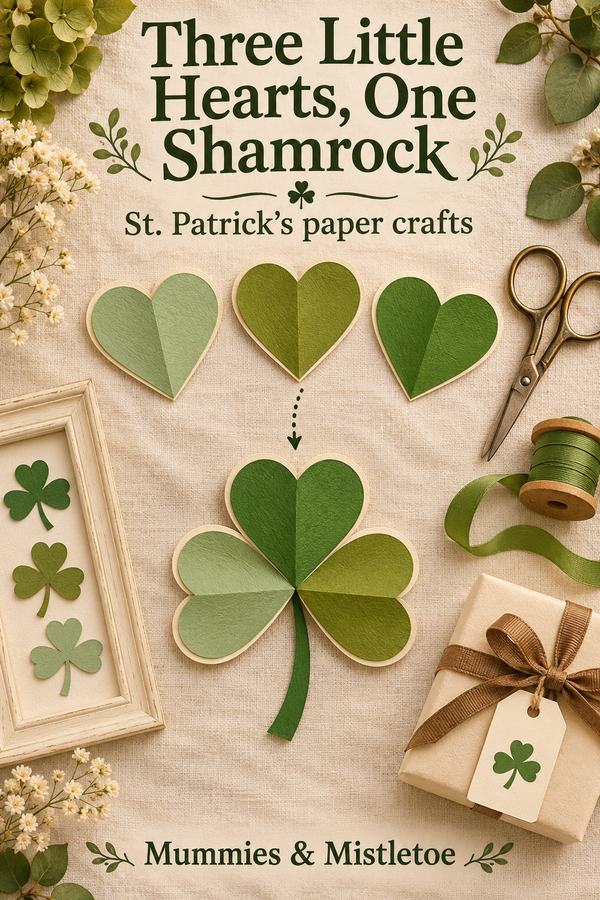
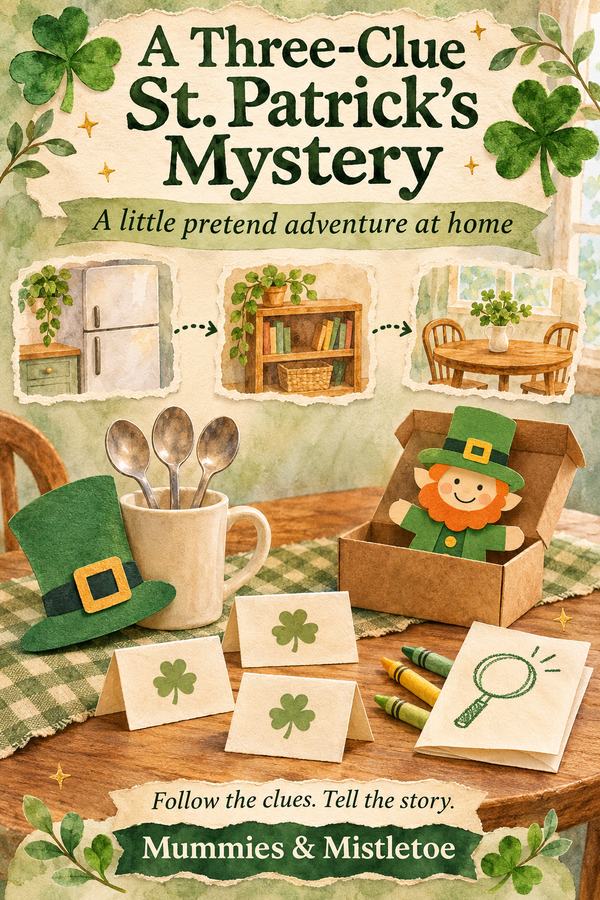
For the motif, cut three small green hearts and place their points together beneath or beside the name. Add a short paper stem. This gives you a simple three-leaf shamrock shape without needing detailed drawing skills.
Draw the decoration beside the name, leaving the letters clear. If children are helping, let them draw their own green shape instead of correcting it to match the adults' cards. Put the cards above the plates or beside the napkins, wherever they won't block a glass or serving spoon.
Use Green in Something You'll Pick Up
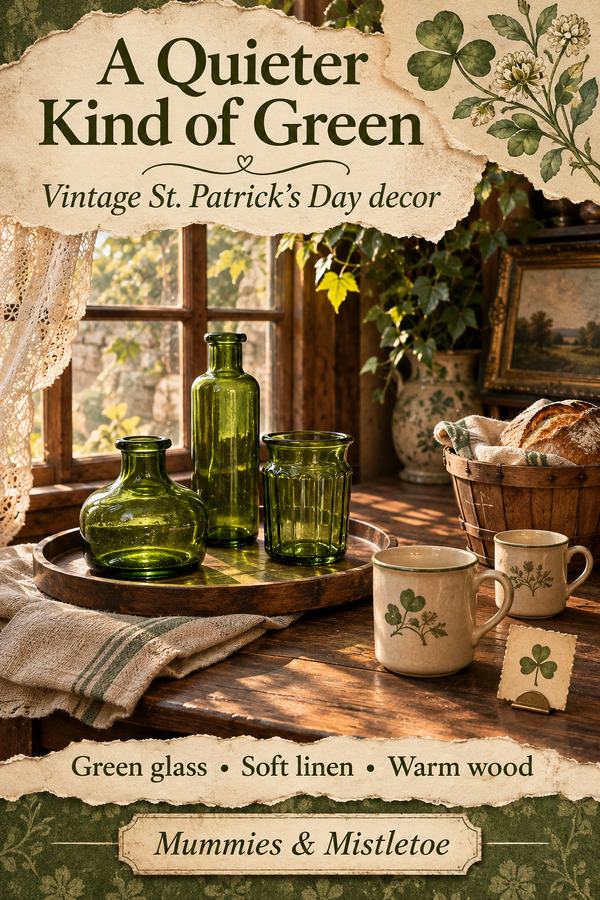
Choose one green item that will be used during the meal: a serving bowl, a water jug or a folded cloth in the bread basket. It can be plain, patterned or a slightly different shade from the paper. Repeating the color in a useful object makes the table feel connected without adding a centerpiece.
If you don't own a green serving piece, use a white one and repeat the paper color in the napkins. Keep any decorative ribbon away from food and handles that need to be gripped. The serving pieces should remain easy to lift, pass and wash.
For a larger table, set a short vase of artificial greenery at one end or on a nearby sideboard. Avoid placing an unidentified plant in the middle of food, especially where children or pets may reach it. The table can look complete with the checks and name cards alone.
Add a Small Conversation Card at Each Place
On the inside of each folded name card, write one invitation to talk. Try “Name something you're glad happened lately,” “Tell us about a small kindness you noticed” or “Choose a place you'd like us to visit together.” These are conversation starters, not a quiz or a requirement to share something personal.
Let people open their cards after everyone has food. Someone can answer briefly, pass or ask the table to answer together. For children, a drawing or a single word can be enough.
This gives the paper card a second purpose beyond marking a seat. At the end of the meal, people can take their cards or leave them with the host. A note about a kindness someone noticed will make the card worth keeping after the meal.
Set the Last Pieces Just Before Supper
Lay the dry mats down, add plates and napkins, then place the name cards where you tested them. Bring out the empty serving dishes once more if you changed anything while decorating. You should still have a clear place for every dish that will arrive.
For six people, make two additional settings. If the table becomes crowded, move the food to a nearby counter and let people serve themselves. Keep the extra settings simple so everyone has room to eat.
Put the green bowl or jug in its place and tuck the first napkin beside a plate. When the food comes out, the open center of the table will be waiting for it.
If you want to use this open-table plan for another holiday, browse the seasonal linens at Mummies & Mistletoe. Let the textile bring the new color while your white plates, serving space and handwritten cards stay useful.