The first crayon mark has gone straight across the heart, and the child is already reaching for another color. Valentine's crafts for toddlers can stay that simple. Prepare a large shape, offer a small choice of age-labeled art materials and let the marks belong to the child.
Set Out One Big Heart
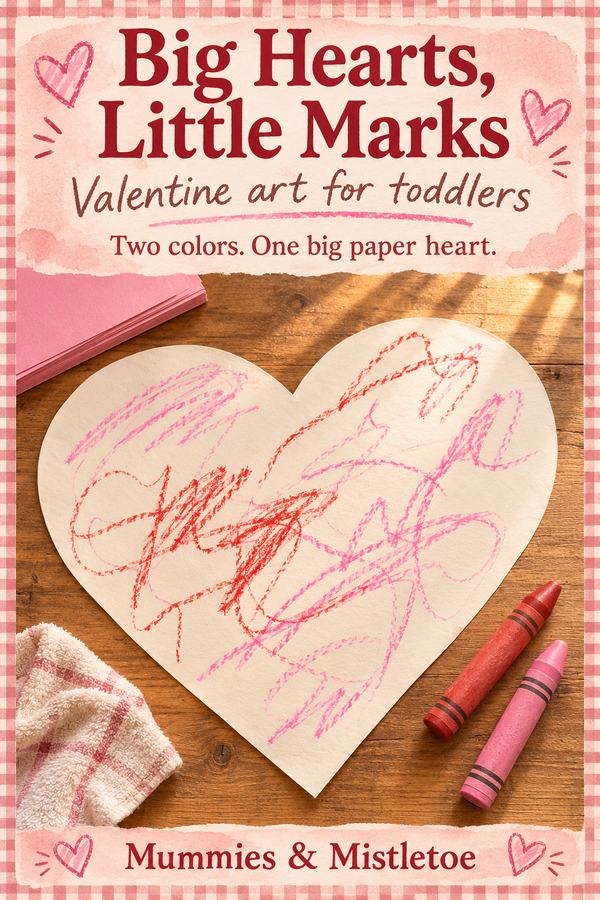
Cover a section of the table and place one large paper heart in front of the child. A heart about eight inches tall gives room for broad movements. Cut it from sturdy paper before the activity begins, keeping scissors out of reach unless you're directly helping with an appropriate tool.
Choose art materials labeled for the child's age and follow their instructions. Use close adult supervision, especially with a child who still mouths materials. If paper pieces or paint aren't suitable for that child, use an age-appropriate drawing activity instead.
Begin with two colors. You can add another if the child asks or remains interested. Keep spare supplies nearby but off the working surface so the choices don't become a pile to empty.
Have a damp cloth and a place for the finished work ready before sitting down. Plan to stop when the child is done, even if the heart still has plenty of blank space.
Let Broad Crayon Marks Become the Design
Offer age-appropriate crayons in red and pink, or two colors the child chooses. Let them make lines, circles or patches across the heart. You can name what you notice without asking the child to draw a particular object.
Notice their choices aloud: 'That line goes all the way across' or 'You chose the red one again.' The activity is about making marks and choices. A heart covered in scribbles is already a finished Valentine.
If the paper slides, hold one edge while the child draws, or use a suitable removable method to secure it to the covered surface. Keep your hand out of the path of the crayon. Turn the paper if the child wants to reach another part.
When interest fades, offer to write the child's name on the back. The unmarked paper can stay just as it is.
Make a Simple Tear-and-Stick Heart
For a child ready for supervised collage, offer a few large pieces of lightweight colored paper to tear. Start the tear yourself if needed, then let the child pull the paper apart. Keep the pieces large and remove scraps that aren't suitable for the child's stage.
Apply glue to a small area of the heart using an age-appropriate glue product, following its instructions. The adult can handle the glue while the child chooses where to place the paper. Add another patch of glue only when the first area is ready.
Let pieces overlap or extend beyond the heart. Once the work is dry, you can leave the ragged edges or ask whether the child wants help trimming them. The edge doesn't have to be neat to show the heart shape.
Use only a few pieces at a time, giving the child room to decide where each piece belongs.
Try Paint Marks Without Requiring a Handprint
If the child enjoys paint and the product is suitable for their age, put a small amount on an appropriate tray. Let them use a suitable brush or their hands only as the product directions allow. Keep paint away from the face and mouth.
A handprint isn't required. Some children dislike having paint on their hands, and a broad brush mark can make a lovely Valentine. Offer the tool without pressing the child's hand into the paint or onto the paper.
Use the same large heart shape and let the child make a few marks, then stop to see whether they want more. Two colors can make an interesting surface without a long session. Wash up according to the product guidance.
Put the wet heart flat in the drying place before moving on. A clean tray makes it easier to move the painting without touching the wet surface.
Turn the Finished Heart Into a Card
When the work is dry, mount it on a larger folded sheet of cardstock. A grown-up can handle the gluing and trimming while keeping the child's artwork intact. Leave enough room for a short greeting on the front or inside.
Ask who the card is for, offering two familiar choices if an open question is too much. Write a simple greeting and the child's name. If the child supplies words, write their words exactly as they say them.
For a child who isn't choosing a recipient yet, make the card for someone who will enjoy it and tell the child where it is going. You can keep a photograph before giving it away. The photograph gives you a keepsake while the card goes to someone who will enjoy it.
Keep the card free of small detachable decorations. The large marks and torn shapes already give it plenty of personality.
End While the Craft Still Feels Like Play
Offer just one project at a time. The crayon heart can be one day's activity and the collage another. Let the child's interest decide when you're done.
Let them help with a small part of cleanup, such as putting crayons in a container, while you manage the rest. Show the child where their picture will dry.
When the card is ready, let the child carry it with help. Leave the broad red line, the overlapping paper and the little empty spaces just as they made them.