The shirts are lined up on the bed, and one bright red looks completely different from the others. Valentine's shirts for family photos don't have to match perfectly to look like they belong together. A shared color, small motif or similar drawing style can connect the outfits while letting each person wear something comfortable.
Start with the people who'll wear them, especially anyone with strong preferences about fit, fabric or graphics. Then choose one of the three plans below. You can use shirts you already own, shop for a missing piece or plan a design around a real gap in the family's wardrobe.
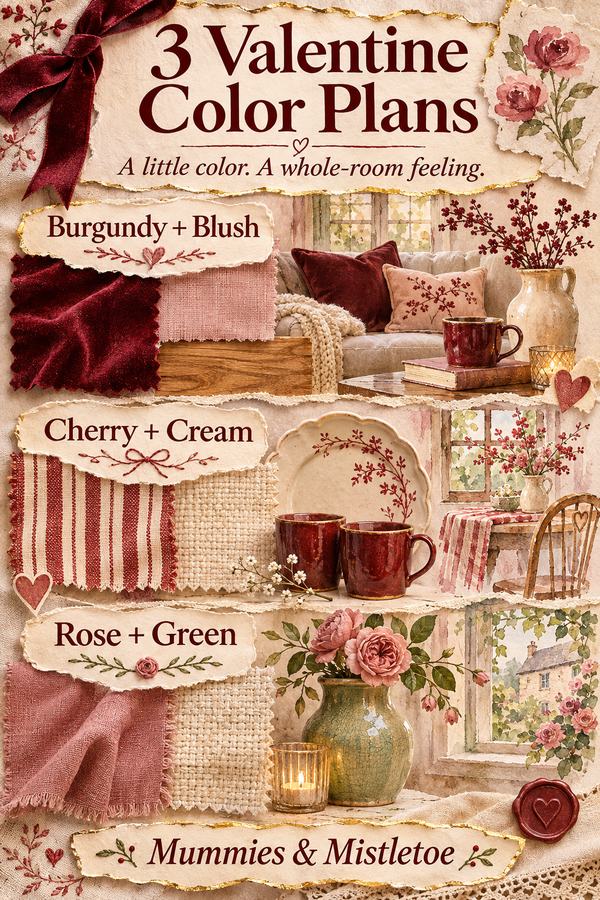
Choose One of Three Color Plans
For a red-and-cream plan, put one or two people in red and the others in cream with a small red detail. Choose reds with a similar undertone. Lay the shirts together in daylight to see how the colors work as a group.
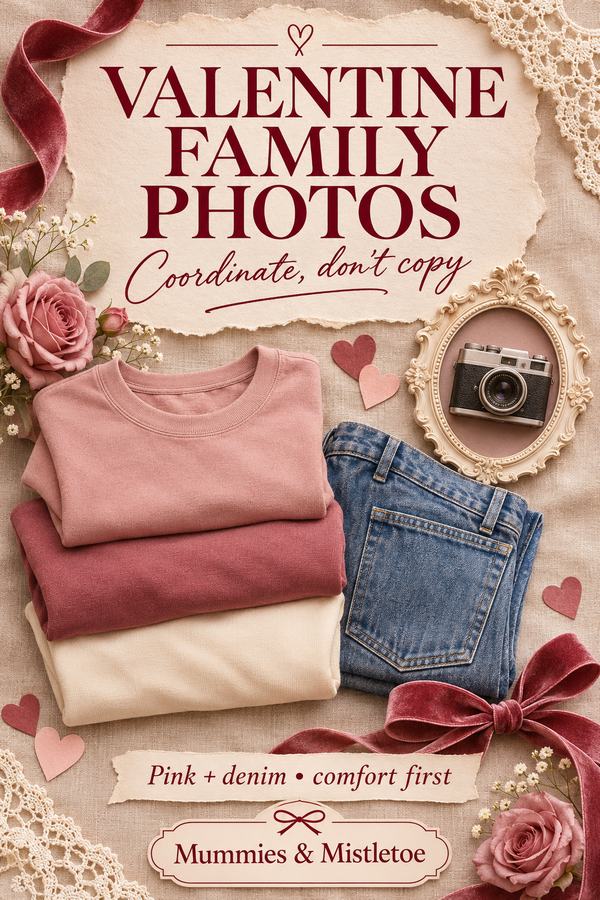
For a pink-and-denim plan, use different depths of pink above jeans or other comfortable blue bottoms. One person can wear a pale pink shirt, another a deeper rose and another a cream shirt with a pink drawing. The repeated blue below helps the tops feel related.
For a quiet plan, use cream or gray shirts with one shared heart color. This suits people who like a small seasonal detail rather than a large slogan. Choose the color with everyone's preferences in mind, then keep the rest of the outfits familiar.
Decide What Actually Needs to Match
Choose one connecting feature before browsing. It might be a simple heart, a hand-drawn flower or a small word in the same lettering style. Matching all the colors, graphics and garments at once makes the choice harder and may leave someone with a shirt they won't enjoy wearing again.
A useful family set can include different designs that belong to the same group. An adult might prefer a small chest graphic while a child chooses a larger central picture. Keep the illustration style or main color consistent so the variation looks intentional.
If you want words, read the whole group together before ordering. Avoid a phrase that only makes sense when everyone stands in a particular order, unless that is the effect you want. Each shirt should also make sense when its wearer heads off to school, work or the grocery store alone.
Measure a Favorite Shirt for Each Person
Ask each person to choose a shirt that fits the way they like. Lay it flat and compare its measurements with the seller's current chart, following the chart's measuring directions. Don't assume that the same size label means the same dimensions across adult, youth and toddler garments.
Check both width and length, along with sleeve style and neckline. A roomy adult shirt and a narrow youth shirt may require different choices even when the listed ages sound right. If the design is offered on several garment types, read the details for the exact one you are selecting.
Write a short order list with the person's name, garment, size, color and personalization. Check the list against the cart one item at a time. That is particularly helpful when several shirts look nearly identical on the order page but have different size selections.
Keep Comfort in the Plan
Ask about scratchy seams, tight collars, preferred sleeve lengths and any fabric the person avoids. A familiar comfortable shirt with a small matching accessory may be a better choice than a new garment that feels wrong. Let children help choose the fit and colors so the outfit feels like theirs.
Read the product's fabric and care information. If someone needs a particular material, verify the exact color and garment because blends can vary. Use the garment's care directions for washing and drying.
For a chilly day, plan the outer layers too. A cardigan or jacket can repeat the group color without hiding every shirt completely. Keep the photo location and weather in mind, and have warm clothing ready instead of expecting everyone to stay outside in short sleeves.
Check the Design and Delivery Before Ordering
Look at the product description and available preview, not only the styled photograph. Confirm which parts are printed, whether names or other text can be changed, and whether the displayed accessories are included. For personalization, check spelling and capitalization carefully.
Review the current production and delivery estimates and the return policy for that item. Personalized products may have different return terms, so settle size and wording before placing the order. If timing is close, build the outfit plan from shirts already in the house.
Compare the available garments as well as the artwork. A coordinated collection works best when it has a comfortable option for each person, with clear sizing and fabric details.
Make the Photo Feel Like Your Family
Choose an ordinary activity that gives people something to do: passing a bowl of strawberries, opening handmade cards or sitting together on the front step when the weather is pleasant. A plain background helps the shirt colors show without needing everyone to pose stiffly. Check the framing before asking children to wait.
Take a few photographs with the whole group, then let people move and talk. A sleeve pushed up or a child leaning against someone may be more familiar than a perfectly straight row. Stop while the activity is still pleasant, and don't make wearing the shirt a condition of joining in.
After the photographs, keep the shirts in the everyday rotation. The best little family connection may be seeing the same red heart turn up at breakfast again next week.
For designs to use at another family occasion, browse the clothing at Mummies & Mistletoe. Use the fit measurements and shared-color approach from this plan to choose a graphic each person will enjoy.